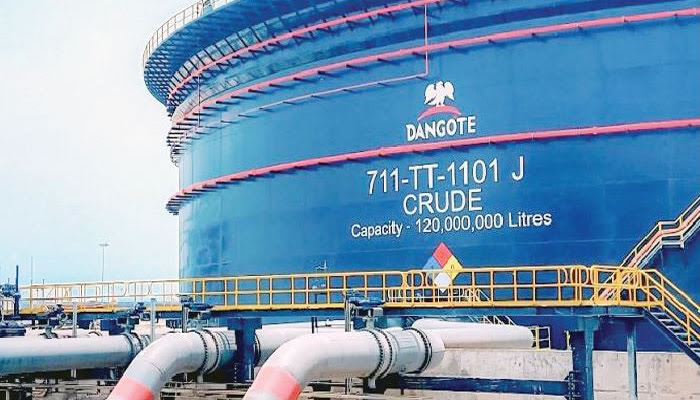
The Dangote Petroleum Refinery says it will supply the Nigerian market with 50 million litres of petrol daily throughout December 2025 and January 2026, totalling 1.5 billion litres each month. The move is designed to guarantee uninterrupted fuel availability during the festive season and into the New Year and to demonstrate that locally refined products can meet national demand.
The company said production currently ranges between 40 and 45 million litres per day, with full capacity ready to support the planned daily supply. It added that this scale of output should end long-standing doubts about the capability of domestic refineries to serve the country’s fuel needs. The refinery is also expanding to reach a refining capacity of 1.4 million barrels per day, a project expected to engage more than one hundred thousand workers across the refinery and fertilizer complex.
During a visit by the South-South Development Commission, company executives highlighted ongoing work with petroleum marketers to strengthen fuel distribution nationwide, including the introduction of CNG-powered haulage to reduce logistics costs. They added that the priority is ensuring that Nigeria has steady access to essential energy products, describing the initiative as a national service similar to the group’s impact in the cement industry.
The South-South Development Commission expressed support for deeper collaboration, noting that the region serves as Nigeria’s natural energy corridor with crude reserves, gas assets, maritime routes, and growing industrial zones. The commission said stronger partnerships with the group could boost product distribution, CNG development, petrochemicals, agriculture, and job creation, while aligning with the Federal Government’s energy stability goals. It added that it is prepared to support state-level policy reforms that strengthen the ease of doing business across the region and encourage private-sector-led growth.
In a letter to the regulatory authority, the refinery reaffirmed its readiness to host officials on-site from December 1 to verify and publicly publish its daily output figures. It also requested support to prevent delays in crude and feedstock imports and in vessel clearances for product evacuation, noting that such delays disrupt operations and increase costs for both the refinery and its customers.
For MSMEs across Nigeria and the wider region, stable fuel availability is expected to ease transportation pressures, reduce cost unpredictability, and support small business planning during the high-demand festive period. The refinery’s commitment could help reduce supply shocks that often affect small businesses, especially those in logistics, retail, and agriculture.