

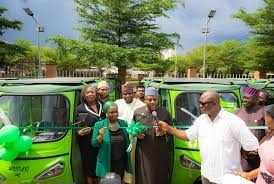
The Federal Government has begun the rollout of two hundred and forty electric tricycles and twelve solar-powered charging stations across selected public universities, marking a new step toward cleaner and more affordable transportation within Nigeria’s higher institutions. The initiative, financed through the Tertiary Education Trust Fund, is positioned as part of a wider push to improve student mobility while reducing dependence on petrol-powered vehicles.
It was formally inaugurated at the University of Lagos, where government representatives described the project as a tangible intervention to support students under ongoing national development plans. Although the first phase was launched in Lagos, authorities did not provide the full list of additional universities that will benefit from the programme.
According to the government, the deployment of electric tricycles is designed to ease movement across campuses while lowering transportation costs for students who continue to face rising living expenses. The vehicles will be managed by the Students’ Union Government in each participating institution. This structure is meant to ensure that fares remain affordable, service is better coordinated, and the assets remain sustainable over the long term. The inclusion of solar-powered charging stations is also expected to encourage responsible energy use, reduce carbon emissions, and support a gradual shift to cleaner mobility solutions within universities.
The government noted that this approach aligns with a broader effort to modernise transportation in higher institutions by reducing reliance on fossil fuels. Officials explained that the project supports environmental goals while offering practical relief to students who struggle with mobility challenges on large campuses. More universities may be included in later phases as the clean-transportation model expands nationwide and demonstrates measurable results.
The electric tricycle rollout is closely linked to a wider initiative known as Project SPROUT, which was introduced earlier under the Presidential Compressed Natural Gas Initiative. Project SPROUT focuses on deploying natural-gas-powered buses and tricycles across university campuses as part of efforts to reduce transport costs, provide safer mobility options, and cut emissions.
The combination of electric vehicles, solar charging stations, and CNG-powered transport forms part of an emerging framework aimed at creating cleaner and more sustainable mobility in tertiary institutions. While the complete list of universities selected for these interventions has not yet been released, the programmes signal an ongoing shift toward modern transportation systems that support students, reduce pollution, and demonstrate early adoption of clean energy solutions in Nigeria’s education sector.


