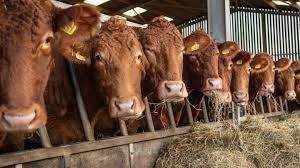
Federal Government says ongoing partnerships and fresh investment interest in the livestock industry will begin to yield visible results within months, giving renewed hope to dairy, beef and poultry value chain operators across the country and the wider African livestock market.
This announcement came at the maiden National Council on Livestock Development in Yola, Adamawa State, where the government highlighted that multiple bilateral and private-sector engagements initiated over the past year have now matured into concrete commitments. These efforts target dairy production, beef processing, fodder development, poultry, piggery, animal breeding and livestock traceability systems, all expected to boost economic diversification, food security and rural livelihoods. Small businesses, especially livestock farmers and processors, stand to gain from improved access to structured markets, better productivity support, disease control measures and opportunities for value-added processing that can increase income.
The Minister of Livestock Development told delegates that development partners are already supporting dairy projects, peacebuilding initiatives and climate-smart livestock production, explaining that Nigerians would begin to “see the physical manifestation” of these efforts in a few months. The government expects the interventions to raise earnings, strengthen animal health systems and reduce long-standing clashes between pastoralists and farmers, a development that could unlock safer operating environments for cattle rearers, milk traders and small livestock-related enterprises. With a new council established to coordinate national strategies, deepen collaboration and attract investments into the livestock space, authorities believe the sector can transition from largely informal operations to a structured hub capable of feeding industries, improving export prospects and empowering rural households whose livelihoods depend on animal farming.
The livestock ministry, established sixteen months ago, is projecting a scale-up of the sector’s economic worth from 32 billion dollars to 74 billion dollars by 2035. The approach is guided by the National Livestock Growth Acceleration Strategy and the National Livestock Master Plan, which outline frameworks for expanding commercial livestock capacity and integrating technology-driven practices to improve traceability, breeding and productivity. A representative of the Adamawa State Government described livestock as a long-standing pillar of the state’s economy, noting that Adamawa pioneered a livestock ministry more than two decades ago. The state is now seeking federal support to expand its pilot ranch project under the National Livestock Transformation Plan, a move expected to reduce open grazing pressures and create structured feeding, processing and trading centres that could benefit ranch managers, feed suppliers and dairy micro-scale processors.
In a keynote address, the Special Adviser to the President on Livestock Reforms encouraged the conversion of conflict-prone corridors into structured fodder production hubs, turning previously volatile spaces into productive agricultural belts. This model could create income streams for farmers and pastoralists, reduce tension and support feed availability for herders across West and Central Africa.
The Permanent Secretary of the Ministry noted that the inauguration of the new Council represents the beginning of a new phase driven by innovation and private-sector participation. Messages of goodwill were delivered by lawmakers, state officials and development partners, followed by a tour of an exhibition displaying dairy, beef, poultry, fodder, breeding and veterinary innovations that could shape the future of animal agriculture for local SMEs and large-scale operator’s.