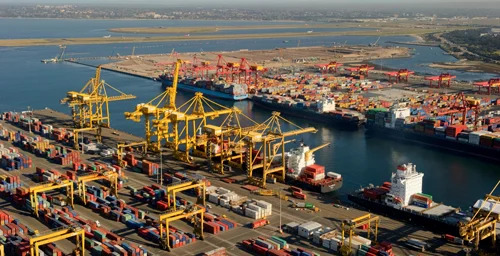
Nigeria’s ongoing reliance on imported building materials has placed the national housing market in a vulnerable position, with new findings warning that currency swings, global price fluctuations, and disrupted supply chains could deepen the country’s already critical housing deficit. The latest State of Lagos Housing Market Report (Volume 3) reveals that despite the availability of raw materials locally, limited processing capacity continues to sustain a heavy dependence on foreign inputs, estimated at roughly seventy percent of total construction material needs.
The publication states that the current structure exposes developers, homebuyers, and small construction businesses to volatility in the global commodities market. Material imports continue to determine pricing across the value chain, meaning inflation, foreign exchange instability, and logistics constraints abroad directly influence building costs in Nigeria. The report stresses that strengthening domestic manufacturing, improving infrastructure for material production, encouraging investment, stabilising policies, and redesigning supply chain systems would reduce this exposure. Such reforms are positioned as essential for lowering costs and expanding access to affordable homes in urban and rural areas.
Lagos remains the centre of this discourse as the country’s largest real estate and construction hub. Market behaviours in the state often reflect or shape national patterns, and analysts consider Lagos an early indicator of upcoming nationwide trends. Current projections suggest that Nigeria’s construction industry could rise by about eight percent annually to reach NGN 25.72 trillion in 2025. Between 2020 and 2024, the sector recorded a compound annual growth rate of 12.1 percent, with expectations of a continued increase at 6.4 percent between 2025 and 2029, possibly placing the industry at NGN 35.38 trillion by the end of the period.
The strength of this growth, however, is overshadowed by the escalating cost of inputs, that is pushing construction beyond affordability for many households and small developers. Inflation, financing costs, cumbersome approval processes, and currency depreciation have contributed to a sustained surge in material prices. While the monetary value of the industry expands, the report argues that real sector growth is largely price-driven rather than volume-driven, masking underlying affordability problems. For builders and MSMEs that depend on predictable pricing for project planning, these shifts translate to shrinking margins and stalled developments.
The report notes that any intervention targeted at Lagos could become a blueprint for national reform due to the city’s economic significance. Addressing supply gaps and easing dollar-linked pricing at the state level could reduce pressure on housing delivery nationwide and improve investor confidence. Stakeholders emphasise that practical adjustments in Lagos would have ripple effects, accelerating federal strategies for market stability and affordable construction.
Data from the housing review shows how sharply prices have climbed. In 2015, an 8mm local iron rod cost about N87,000 per 133 pieces while a similar imported product cost N102,000. By 2023, iron rods between 10mm and 16mm averaged N800,000 per tonne. Between May 2023 and May 2024, a 12mm rod moved from N8,000 to N19,000, a 16mm rod from N4,800 to N11,500, a 10mm rod from N3,600 to N9,500, and an 8mm rod from N2,500 to N6,500. By 2024, the same sizes rose past N1.6 million per tonne, representing more than a hundred percent increase in one year, with prices doubling again into 2025 for both iron and aluminium sheets.
These cost jumps have intensified concerns for property developers, artisans, and retail-level building material merchants who depend on construction activity for daily income. As households and small real estate businesses face reduced purchasing power, many projects are slowing while others remain abandoned. Analysts believe that without urgent reforms, Nigeria risks widening its housing gap even further, weakening affordability for middle and low-income families.
The State of Lagos Housing Market Report, now in its third edition and released by the Roland Igbinoba Real Foundation for Housing and Urban Development, builds on earlier volumes issued in 2009 and 2016. It positions Lagos as the testing ground for solutions capable of reshaping the national housing economy and argues that reducing import dependence may be the single most critical step toward stabilising the sector.