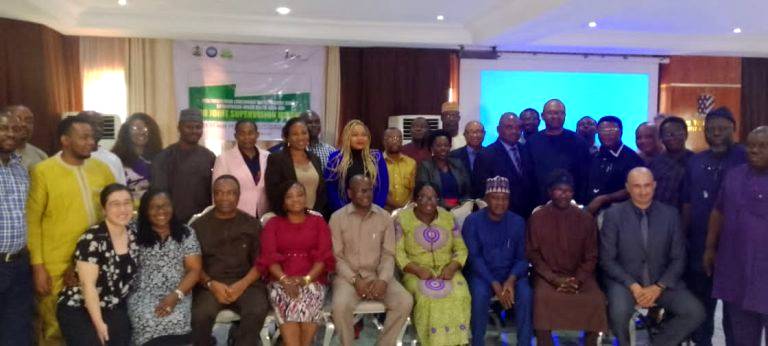


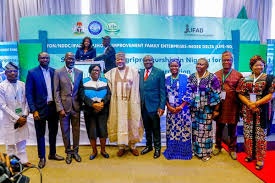
The Federal Government has unveiled plans to expand youth agripreneurship as a central economic strategy aimed at transforming food systems, creating jobs, and driving inclusive national growth. The announcement was made at a high-level business and policy forum in Abuja focused on accelerating youth-led agribusiness through the FGN–NDDC–IFAD LIFE-ND Project in the Niger Delta.
At the event, the Minister of Agriculture and Food Security said the government is repositioning agriculture as a major engine of economic transformation under the Renewed Hope Agenda. He noted that young Nigerians are increasingly shaping the agrifood value chain through innovations in precision agriculture, digital marketplaces, agro-processing, and climate-smart technologies. However, he explained that youth participation remains limited by challenges such as restricted access to land, finance, processing facilities, markets, and specialised skills.
He said the government plans to prioritise land access for young farmers, expand inclusive financing mechanisms, strengthen incubation and mentorship systems, and improve market access through digital platforms and stronger public–private partnerships. He added that future youth-focused agribusiness policies will embed climate resilience, sustainable land management, and transparent monitoring systems capable of tracking progress across different age groups, genders, and regions.
The minister described the LIFE-ND Programme as proof that youth-led agribusiness models are both viable and transformational, highlighting that the next phase will focus on rapid expansion across the country. He called on financial institutions, development organisations, and private-sector actors to align investments and incentives with youth-led agribusiness in order to unlock scale, competitiveness, and long-term profitability.
In her remarks, the Country Director for IFAD in Nigeria said the LIFE-ND Programme has become an internationally recognised model, enabling the creation of nearly 24,000 youth-led agribusinesses across crop production, livestock, aquaculture, and agro-processing. She noted that Africa’s predominantly young population presents a major economic opportunity and emphasised that Nigerian youths continue to push innovation despite barriers to land, finance, and market access.
She referenced the Nigeria Youth Mapping Report, which identified more than 6,000 young innovators across the food system, with over half already engaged in agribusiness. She added that the LIFE-ND Programme operates through incubation systems, producer partnerships, digital integration, and strong inclusion principles covering women and persons with disabilities.
IFAD said it intends to continue scaling youth agripreneurship through LIFE-ND and other investments including Special Agro-Industrial Processing Zones, the Value Chain Development Programme, and Agribusiness Hubs, all aimed at strengthening the agricultural landscape and creating sustainable opportunities for young people across Nigeria.