Nigeria has secured a $1 billion innovation fund to support start-ups operating in the marine and blue economy sector, a move expected to boost youth participation, strengthen maritime innovation, and expand the country’s ocean-based economic activities.
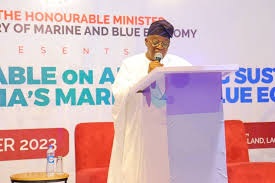
The Chief Executive Officer of the Maritime Innovations Hub, Ronke Kosoko, disclosed the development at a media parley organised in collaboration with the Ministry of Marine and Blue Economy in Abuja. The event was attended by key stakeholders, including the Special Adviser to the President on Social Media, Olusegun Dada, as well as representatives from the National Inland Waterways Authority, Nigerian Maritime Administration and Safety Agency (NIMASA), the Nigerian Shippers’ Council, and other government agencies.
Mrs. Kosoko said the fund will be officially launched at the Blue Economy Investment Summit, scheduled for 9–11 March 2026 in Lagos. She revealed that international funders are expected to meet with President Bola Tinubu and the Governor of the Central Bank of Nigeria, Olayemi Cardoso, during the summit.
She explained that the $1 billion fund follows Nigeria’s earlier success in securing a $100 million training bid aimed at capacity development in the maritime industry. “When the $100 million offer came, we weren’t looking for it because people trust us globally due to our track records, but we have rearranged another offer and it was in the process that the $1 billion offer came. The stage is now set for its formal launch,” she said.
Highlighting investor priorities, Kosoko added, “Global investors focus on clear deliverables, not politics. They are interested in what can be achieved, and when we are ready with that, funding and support will flow in.”
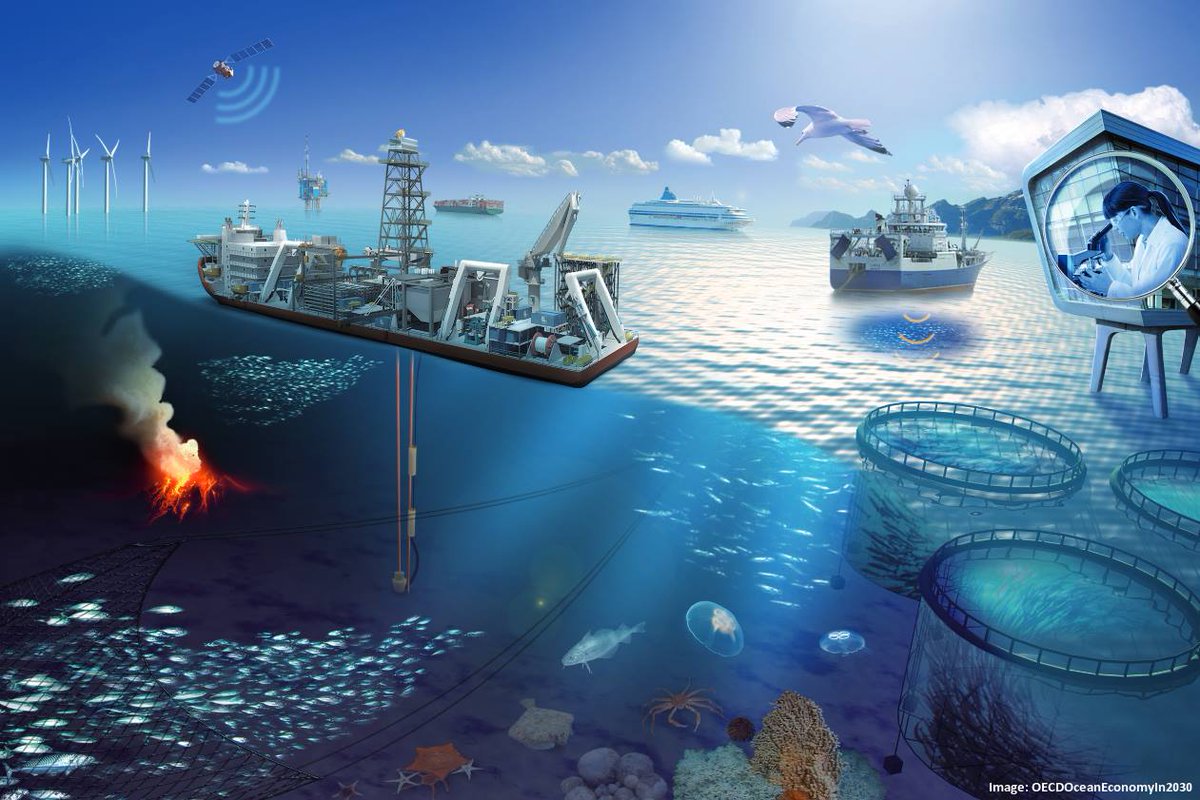
The initiative aligns with Nigeria’s broader economic diversification agenda, which seeks to reduce oil dependence by leveraging the blue economy—covering maritime transport, fisheries, coastal tourism, shipbuilding, and ocean-based renewable energy. With one of West Africa’s largest coastlines and a strategic location along major shipping routes, Nigeria has significant potential in this sector. However, limited port infrastructure, policy bottlenecks, and restricted access to financing have hindered growth, pushing vessels and investors toward neighbouring countries such as Togo and Côte d’Ivoire.
The newly secured fund aims to close these gaps by providing start-ups with capital, skills, and international exposure. Mrs. Kosoko noted that no fewer than 370,000 youth across Nigeria will participate in the summit, alongside 28 governors and 37 serving senators, ensuring broad engagement and impact.
Reflecting on the country’s maritime performance, Kosoko lamented that Nigeria continues to lose billions of naira to neighbouring ports due to operational inefficiencies. “These countries studied our weaknesses and built a business around Nigeria’s failure. Reclaiming these lost opportunities is a top priority, and a dedicated session at the summit will focus on this,” she said.
At the event, Mr. Dada emphasized the need for simpler, more accessible policies, urging that government initiatives be communicated in ways that young people and the general public can easily understand, rather than through complex technical jargon.
The $1 billion innovation fund is expected to strengthen Nigeria’s marine and blue economy start-ups, create jobs, and stimulate sustainable economic growth while positioning the country as a competitive player in the regional and global maritime sector.