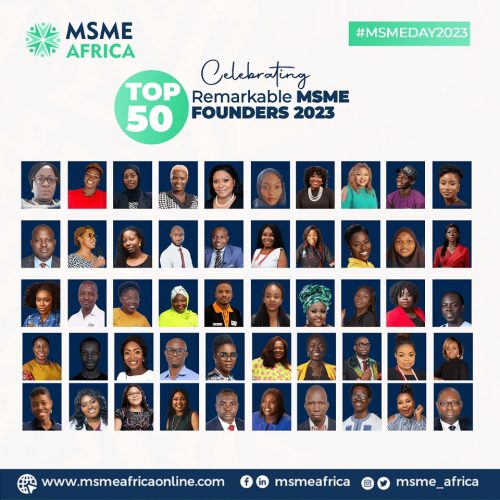
The Aurora Tech Award has unveiled its Top 100 founders to watch for 2026, spotlighting women-led startups from emerging markets after a record-breaking application cycle.
In a statement, the organisers disclosed that 3,400 applications were received from 127 countries, marking a sharp increase from last year’s 2,018 submissions across 116 countries and underscoring growing global interest in women-led technology ventures.
The Aurora Tech Award is a global initiative dedicated to supporting outstanding female tech founders from emerging markets. Selected winners receive up to $50,000 in non-dilutive funding, alongside tailored business support, strategic resources, and access to a global network of investors and industry experts, benefits that are particularly critical for early-stage startups and small businesses seeking scale without equity dilution.
Nigeria recorded the highest number of applications, followed by Kazakhstan, Kenya, Colombia, Egypt, Brazil, India, Chile, Pakistan, and Mexico. The widespread highlights the increasing depth of innovation coming from Africa, Latin America, and parts of Asia, where startups are increasingly focused on solving local market challenges with scalable business models.
Health tech emerged as the strongest sector across the leading countries represented. The 2026 cohort includes 23 health-focused startups, continuing a trend from the previous year. These founders are addressing areas such as well-being, longevity, digital medical tools, productivity platforms, life science, and sports technology. Agritech and edtech also maintained strong representation, reflecting sustained global demand, while artificial intelligence continues to play a central role across products, often combined with blockchain and Internet of Things technologies.
Fintech participation rose notably this year, with 19 startups making the Top 100, partly driven by the introduction of a dedicated fintech track. For many emerging-market founders and MSMEs, this growth points to increasing demand for digital financial tools that improve access to credit, payments, and financial inclusion.
Regional trends show HR tech applications dominated by Latin America, followed by Africa and the Middle East and North Africa, while agritech entries, largely from Africa and Latin America, remain heavily focused on B2B models. Edtech retained its relevance, with 18 startups demonstrating high adoption of AI-powered tools aimed at improving learning outcomes and operational efficiency.
In countries such as Nigeria, Kenya, and South Africa, agritech and food tech continue to stand out, reflecting both innovation in agricultural value chains and rising demand for energy and infrastructure solutions that support food production and distribution. Across all top countries, AI consistently appears as a core enabling technology, reinforcing its role as a key driver of competitiveness for startups and small businesses alike.
The organisers noted that the Top 100 founders represent roughly the top three per cent of all applicants, describing them as builders of commercially viable, category-defining companies solving real problems in their communities and markets.
Two notable insights from this year’s applications include the growing treatment of AI as a standard component of product development in health tech and edtech, and stronger alignment of founders’ missions with the United Nations Sustainable Development Goals, signalling a shift toward impact-driven entrepreneurship.
Business model analysis shows a strong preference for B2B solutions, particularly in Chile, India, and Peru, pointing to increasing market maturity and enterprise demand. Funding expectations also varied widely. Startups from India reported the highest average capital needs at about $1.25m, followed by Kenya at roughly $840,000 and Colombia at around $620,000. Founders in Egypt and Nigeria are seeking close to $540,000 and $510,000, respectively, while applicants from Peru and Morocco are targeting between $300,000 and $340,000.
The award’s most recent winners included Solape Akinpelu of HerVest in Nigeria, Loretxu Garcia Arraztoa of Nido Contech in Chile, and Shreya Prakash of FlexiBees in India, alongside Laura Velásquez Herrera of Arkangel AI in Colombia and Leonie Korn of UpLeap in Switzerland. The organisers confirmed that the number of top finalists for the 2026 cycle will be announced in February, with winners to be celebrated at a global ceremony later in the year.