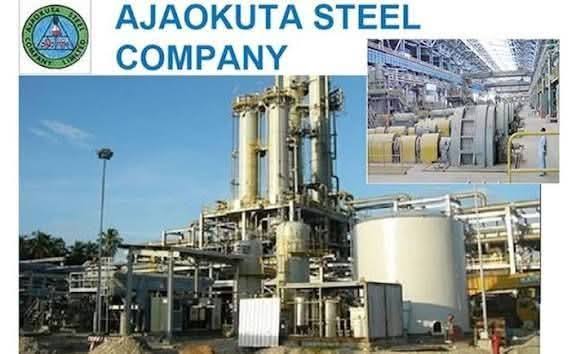
The Federal Government plans to spend N6.04 billion on personnel costs for Ajaokuta Steel Company Limited in 2026, highlighting the persistent challenge of maintaining Nigeria’s flagship steel complex more as a payroll entity than a productive industrial facility.
Data from the 2026 Appropriation Bill shows that the company’s total allocation stands at N6.69 billion, with salaries, allowances and statutory contributions accounting for roughly 90.4% of the budget. Of the N6.04 billion earmarked for staff, N4.79 billion is set aside for wages, while N1.25 billion covers allowances, pension contributions, NHIS payments and employees’ compensation insurance.
The Capital spending, by contrast, remains minimal. Less than 7% of the total allocation—N410.8 million—is directed toward assets, rehabilitation and infrastructure, including minor fixed asset purchases, facility construction, and repairs primarily related to electricity and office buildings. This allocation structure underscores how little funding is aimed at reviving production at a plant originally envisioned as the backbone of Nigeria’s steel and manufacturing sector.
Year-on-year trends show little change in focus. Personnel costs rose from N4.29 billion in 2024 to N6.21 billion in 2025 and are projected at N6.04 billion in 2026, a marginal 2.7% decrease, while capital investment continues to lag. The steel complex is projected to generate zero independent revenue and remains fully reliant on federal subventions for survival.
Preparatory work under the Federal Ministry of Steel Development continues, with N150.99 million allocated for revitalisation and N1.06 billion for project preparation covering feasibility studies, environmental assessments and investment mobilisation. However, these allocations are lower than in 2025, reflecting a 56% drop in project preparation spending even as the plant remains idle.
onceived in 1979 as a national industrial flagship, Ajaokuta was expected to reduce steel imports, stimulate industrialisation and support economic diversification. More than four decades later, budget data show it functioning largely as a payroll institution. The company currently employs about 3,000 staff, with full commissioning potentially creating 10,000 direct jobs and up to 500,000 additional roles in upstream and downstream industries. For now, the proposed 2026 budget indicates that recurrent spending dominates, while physical revival of the complex remains confined to studies and planning.