

The Federal Government has said the $500 million Agricultural Value Chains for Growth Programme, known as AGROW, will directly support farmers through modern, market-based and farmer-driven initiatives aimed at boosting food production and strengthening national food security.
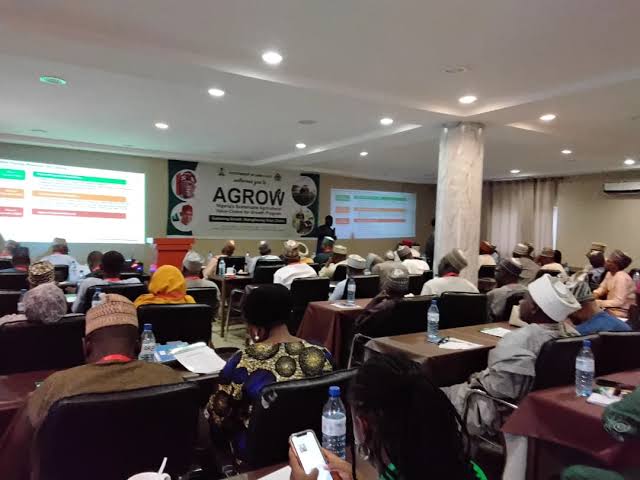
The government made this known at the AGROW Agroecological Zonal Workshop held in Kano under the Nigeria Sustainable Agricultural Value Chains for Growth Programme. It said the initiative reflects a deliberate shift toward policies that allow farmers to actively shape agricultural development based on real field experiences rather than top-down decisions.
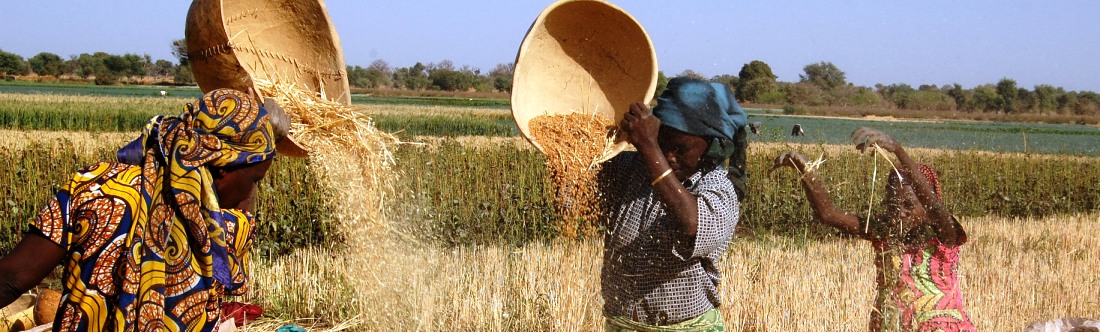
According to the government, the current administration is adopting a farmer-driven, market-oriented and results-based approach to agriculture, placing emphasis on productivity, efficiency and measurable outcomes across key value chains. AGROW is focused on rice, wheat, tomato, sesame and sorghum, which are considered critical to Nigeria’s food security and economic growth.
The $500 million programme was described as a homegrown initiative led by Nigeria and jointly developed by the three tiers of government, with support from private sector players and development partners, including technical backing from the World Bank.
The government noted that previous agricultural programmes were constrained by fragmented public spending, blanket input subsidies, government-controlled implementation processes, weak land administration systems and multiple informal trade levies. AGROW, it said, is designed to address these challenges by promoting state-level ownership, targeted investments and financial incentives tied directly to market outcomes.
It added that the programme prioritises stronger private sector participation, improved transparency in land administration and smoother interstate agricultural trade to reduce costs and improve access to markets for farmers and agribusiness operators.
The government explained that AGROW will operate through stronger linkages between private sector actors and smallholder farmers, modernised on-farm production systems and a robust monitoring and evaluation framework to track performance and impact.
States seeking to benefit from the programme were urged to meet key requirements, including transparent land-based investment processes, functional digital farmer registries, openness in interstate trade levies, reduced reliance on blanket subsidies and stronger support for agricultural cooperatives.
At the workshop, the Kano State Government said the programme aligns with its ongoing efforts to boost agricultural productivity, disclosing recent investments in extension services, mechanisation equipment and the establishment of new mechanisation centres across key farming zones.
Participants at the workshop were drawn from Sudan Savannah states including Kano, Katsina, Bauchi, Gombe, Kebbi, Sokoto and Zamfara, reflecting the programme’s regional focus on areas critical to Nigeria’s food production.