Katsina State has empowered 89,000 farmers under the Nigeria COVID-19 Action for Recovery and Economic Stimulus (NG-CARE) programme, marking one of the most extensive agricultural support interventions in the state in recent years.
The intervention, implemented through the FADAMA component of NG-CARE, is aimed at restoring livelihoods disrupted by the COVID-19 pandemic while strengthening food security, boosting productivity and improving rural incomes across the state.
Speaking in an interview, the Katsina State Coordinator of NG-CARE, Nafiu Mohammad Musa, said the programme was deliberately designed to cushion the economic shocks suffered by farmers during the pandemic, when lockdowns, movement restrictions, and market closures significantly disrupted agricultural activities.
“During COVID-19, many farmers could not access their farms, inputs or markets. NG-CARE was introduced to reverse that damage, restore livelihoods, and build long-term resilience for smallholder farmers,” Musa said.
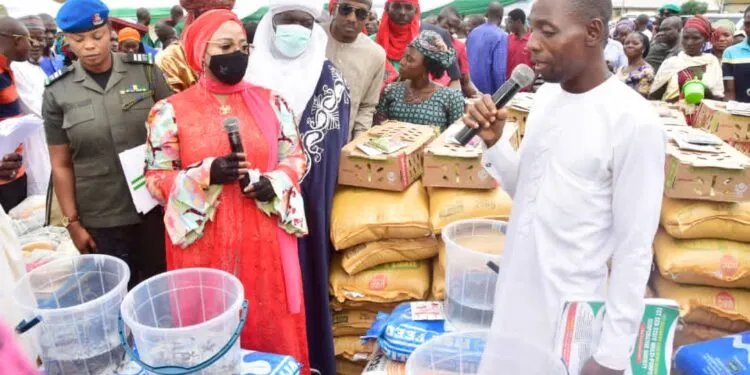
He explained that beneficiaries received a wide range of agricultural inputs and productive assets, including improved seeds, fertilisers, agro-chemicals, knapsack sprayers, fingerlings for fish farming, and day-old chicks for poultry production. In addition, farmer groups were supported with shared mechanised equipment such as power tillers, threshers, grinders and milling machines, helping to reduce production costs and post-harvest losses.
According to Musa, the agricultural intervention is a key pillar of Governor Dikko Umaru Radda’s Building Your Future agenda, which prioritises food security, rural development and economic empowerment.
“Katsina’s economy is largely agrarian. By supporting 89,000 farmers, the state government is not only improving household incomes but also strengthening food availability, stabilising prices and supporting agro-based MSMEs across communities,” he said.
The NG-CARE programme operates on a Performance-for-Results (P4R) model, under which the Katsina State Government funds projects upfront, while the World Bank reimburses verified outcomes after independent assessment. Musa noted that this approach has helped improve transparency, accountability, and value for money.
Farmers across several local government areas have already reported improved yields, reduced production costs, and better access to markets, particularly those who benefited from shared mechanisation assets and quality inputs.
Beyond short-term recovery, the programme is laying the foundation for sustainable agricultural growth by promoting modern farming practices, cooperative ownership of assets, and inclusive access to resources for smallholder farmers and agri-based MSMEs.
With the first phase of NG-CARE officially concluded in December 2025, Katsina State has signalled readiness to build on the gains recorded. Governor Radda has submitted an expression of interest to the World Bank for the continuation of the programme under NG-CARE 2.0, which is expected to further expand agricultural and livelihood support across the state.
“As we move into the next phase, the focus will be on deepening impact, scaling support and ensuring that more farmers and rural households benefit from government-backed interventions,” Musa said.