

Canada is committing 5 million Canadian dollars, with Germany providing technical support, to a new programme designed to expand access to climate and biodiversity financing for women-led businesses across Nigeria, with 240 enterprises set to receive direct seed funding.
The initiative brings together Global Affairs Canada, the Development Bank of Nigeria, and Germany’s International Climate Initiative through the IKI Small Grants scheme. It aims to lower long-standing barriers that women entrepreneurs face in accessing climate finance, while strengthening local institutions that support climate and biodiversity action.
Canada’s contribution, valued at about 3.4 million euros, is being deployed as co-financing under the IKI Small Grants “Funding the Funders” approach. This model enables trusted national institutions to channel climate and biodiversity funding directly to local actors. With Germany’s technical backing through IKI Small Grants, the programme will run until August 2029.
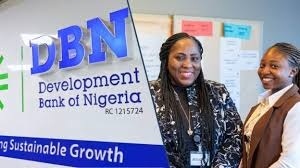
Under the arrangement, the Development Bank of Nigeria will design and manage a nationwide funding programme targeting women-led micro, small, and medium enterprises. The state-owned development bank will provide small grants alongside tailored training to help businesses reduce emissions, manage climate risks, and deliver products or services that support climate and biodiversity protection.
The programme is expected to reach about 5,000 women-led businesses nationwide. All beneficiaries will receive capacity development support to strengthen skills, knowledge, and business practices. From this pool, 240 high-potential enterprises will be selected for additional seed funding to help scale their operations. The initiative is also projected to generate benefits for roughly 25,000 indirect beneficiaries, including employees, suppliers, and community members connected to the supported businesses.
A strong focus will be placed on rural areas, where women are often more exposed to climate-related risks such as unpredictable weather, declining agricultural yield,s and fragile livelihoods, yet have limited access to financing to address these challenges. For the Development Bank of Nigeria, delivering social impact through targeted funding remains a core mandate.
Officials at DBN say the programme directly addresses persistent gender gaps in access to finance. The bank’s Head of Product Development and Strategic Alliances explained that women are disproportionately affected by climate change and face greater difficulty securing credit from traditional financial institutions. Through Canada’s co-financing and Germany’s technical support, DBN will be able to provide grant funding to women-led MSMEs that would otherwise struggle to access climate finance.
She noted that women in Nigeria receive less than 20 per cent of available funding overall, adding that the programme is expected to improve financial inclusion, strengthen women’s contribution to climate action, and enhance their ability to adapt to climate change. The target beneficiaries include women running off-grid energy businesses, climate-smart agricultural enterprises and other ventures addressing local environmental challenges.
From the Canadian perspective, the partnership reflects broader priorities around gender equality, climate action and economic empowerment. Officials said the initiative aligns with Canada’s approach to working with African partners by expanding economic opportunities while tackling shared global challenges such as climate change. Partnering with IKI Small Grants was described as a way to build on an established and effective global mechanism to achieve stronger local impact.
For IKI Small Grants, the collaboration highlights the importance of localising climate and biodiversity finance. The programme’s representatives noted that many local actors are excluded from global funding due to complex application processes and administrative burdens. By supporting national institutions like DBN, the “Funding the Funders” approach makes it easier for community-level businesses to access grants in local contexts, including through simplified processes and local languages.
The project, titled Climate and Biodiversity Action: How Germany is ‘Funding the Funders’, is co-financed by Global Affairs Canada and implemented under the IKI Small Grants programme. The scheme is funded by Germany’s Federal Ministry for the Environment, Climate Action, Nature Conservation and Nuclear Safety and implemented by Deutsche Gesellschaft für Internationale Zusammenarbeit as part of Germany’s International Climate Initiative.