

• News
  • Business
  • Opportunities
    • Articles & Resources
  • Spotlight
  • Views
    • Interviews
    • Opinions
  • MSME Jobs
  • More
    • Africa
    • World
  • webmail
  • Terms of Use
MSME Africa
  • News
  • Business
  • Opportunities
    • Articles & Resources
  • Spotlight
  • Views
    • Interviews
    • Opinions
  • MSME Jobs
  • More
    • Africa
    • World
  • webmail
  • Terms of Use
No Result
View All Result
  • News
  • Business
  • Opportunities
    • Articles & Resources
  • Spotlight
  • Views
    • Interviews
    • Opinions
  • MSME Jobs
  • More
    • Africa
    • World
  • webmail
  • Terms of Use
No Result
View All Result
MSME Africa
No Result
View All Result

Africa Faces Food Security Risks as Reliance on Four Staples Exposes Vulnerabilities

Olusola Blessing by Olusola Blessing
January 20, 2026
in Agriculture&Agro-Allied, News
0
Africa Faces Food Security Risks as Reliance on Four Staples Exposes Vulnerabilities
Share

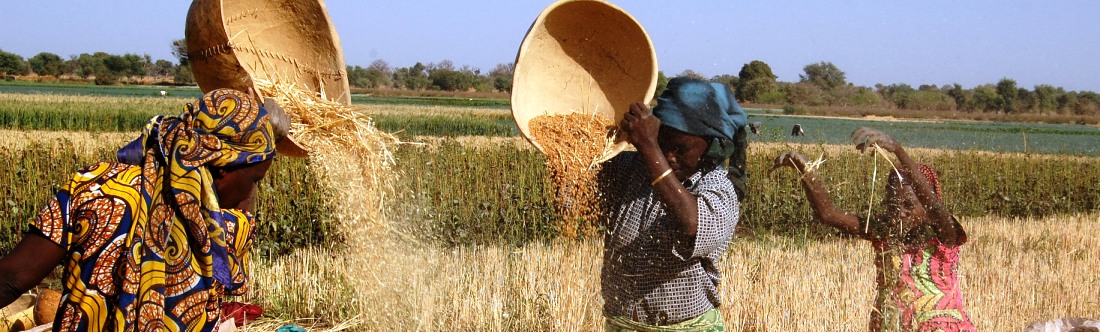
Cassava, rice, maize, and wheat account for 45% of the calories consumed across Africa, highlighting the continent’s heavy dependence on just these four staple foods, according to the World Bank report, Food at a Crossroads: The Nexus Between Transport, Logistics, and Food Security in Africa.

The report warns that this reliance leaves Africa vulnerable to supply disruptions, rising food prices, and climate-related shocks. A significant portion of these staples is imported from Europe, South Asia, and other regions, with Africa bringing in over 30 million tonnes of maize, more than 35 million tonnes of rice, and around 60 million tonnes of wheat annually.


Transport and logistics challenges compound the problem. Imported food often travels an average of 4,000 kilometers over 23 days before reaching consumers, four times longer than in Europe, exposing it to spoilage, loss, and delayed delivery. Many ports suffer from outdated systems, low capacity, and poor infrastructure, creating bottlenecks. Weak road networks, congested borders, and limited rural connectivity further slow distribution, increasing costs and reducing availability of staples.

Storage is another major concern. Inadequate facilities and poor handling practices mean that up to 40% of fruits and vegetables and 20–25% of cereals, rice, and maize are lost before reaching households. Losses of cassava, maize, rice, and wheat grew from 22.5 million tonnes in 2010 to 33.8 million tonnes in 2022—nearly 30% of annual imports. The World Bank stresses that investing in modern storage, logistics, and handling practices could significantly reduce these losses.


Nigeria faces a particularly urgent food security challenge. The United Nations Food and Agriculture Organization projects that about 34.7 million Nigerians could experience severe food shortages during the 2026 lean season from June to August. Rising production costs, insecurity in key farming regions, economic shocks, and limited access to markets and credit are driving the threat.


A recent Nairametrics survey of farmers in Nigeria’s North-Central and North-West regions revealed that soaring costs for fertiliser, fuel, and labour, combined with insecurity and limited government support, are making farming increasingly unprofitable. Many farmers reported reducing cultivation or considering abandoning their farms. Collapsed support schemes, such as the Anchor Borrowers Programme, and poor rural infrastructure have further discouraged production.

The report recommends targeted interventions, including subsidized inputs, improved access to credit, a mechanisation program, and enhanced rural security, as critical measures to avert severe food shortages in 2026 and beyond.

 

Post Views: 9
Share

Related Posts:

  • Wheat Development Programme Yield Underscores the Role of Research and Trials  
    Wheat Development Programme Yield Underscores the…
  • MSME Africa Unveils Top 50 Remarkable MSME Founders 2023, Awards them $25,000 in Media Credits
    MSME Africa Unveils Top 50 Remarkable MSME Founders…
  • Best Cities to live as an Entrepreneur in Nigeria
    Ultimate 2025 Guide to the Top Business Enabling…
  • Africa must prepare for the inevitability of a global food crisis - Akinwumi Adesina
    Overcoming Binding Constraints to Competitive…
  • PAFTRAC launches 2022 CEO Trade Survey
    PAFTRAC launches 2022 CEO Trade Survey
  • CFM reiterates the socio-economic value of Nigeria’s wheat value chain
    CFM reiterates the socio-economic value of Nigeria’s…
Tags: AfricaFoodSecurityAgricultureCassavaClimateImpactFoodImportsFoodSupplyMaizeMSMEsPostHarvestLossRicewheat
Previous Post

Lagos to Enforce Water Safety Standards as Regulator Warns of Public Health Risks

Next Post

IMF Upgrades Nigeria’s Growth Outlook as Non-Oil Exports Hit Record $6.1 Billion

Next Post
IMF Upgrades Nigeria’s Growth Outlook as Non-Oil Exports Hit Record $6.1 Billion

IMF Upgrades Nigeria’s Growth Outlook as Non-Oil Exports Hit Record $6.1 Billion

Leave a Reply Cancel reply

Your email address will not be published. Required fields are marked *

No Result
View All Result
Join MSME on Whatsapp
Subscribe To Our Newsletter
Enter your email to receive a weekly round-up of our best posts. Learn more!
icon
By subscribing, you agree with our privacy policy and our terms of service.

Recent Posts

  • Nigeria, Netherlands Strengthen Partnership to Boost Trade, Energy, and Security
  • Call for Consultants: Enovate Lab’s Expert Pool 2026
  • IMF Upgrades Nigeria’s Growth Outlook as Non-Oil Exports Hit Record $6.1 Billion
  • Africa Faces Food Security Risks as Reliance on Four Staples Exposes Vulnerabilities
  • Lagos to Enforce Water Safety Standards as Regulator Warns of Public Health Risks

Recent Comments

  • 10 Reasons Why SMEs Should Invest in Video Marketing - MSME Africa on How to Create Viral Videos for Social Media in 2024
  • link alay4d on 5 Nigerian-based Companies Providing Accelerator Programs for Startups in 2024
  • Damilare Oladeji on Nigerian Government Agencies that Support Entrepreneurship in 2024
  • situs alay4d on 50 Best Tools to Boost Your Productivity as an Entrepreneur in 2025
  • Otabor Osayomore Blessing on Ultimate 2025 Guide to the Top Business Enabling Cities for Startup Founders and Entrepreneurs in Nigeria
  • About us
  • Advertise with Us
  • Contact Us
  • Home
  • News
  • Newsletter
  • Submit News
  • Terms of Use

© 2023 MSME Africa - All rights reserved.

No Result
View All Result
  • Home
  • News
  • Business
  • Financial Services
  • Opportunities
  • About Us

© 2023 MSME Africa - All rights reserved.