

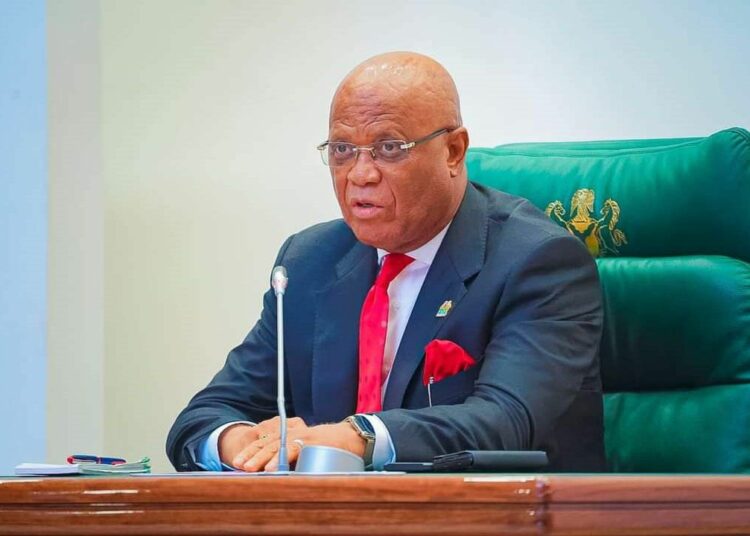
Akwa Ibom State Governor, Umo Eno, has announced a broad welfare and empowerment package for over 33,000 applicants who sat for the recent Civil Service Computer-Based Test, assuring that every participant will benefit regardless of their score. The Governor made the disclosure during a briefing at Government House in Uyo after receiving the CBT performance report from the Commissioner for Science and Digital Economy, Dr. Frank Ekpenyong. He said each applicant will receive ₦50,000 as transport and welfare support, adding that no one should attend an interview and leave without compensation.
While noting that government vacancies cannot accommodate all applicants, the Governor revealed that unsuccessful candidates will be enrolled into the Dakkada Skills Acquisition Programme to help them gain employable skills and income opportunities. He explained that the state has several ongoing projects requiring trained manpower, and that vocational and digital skills remain useful pathways for employment or entrepreneurship. This development could benefit MSMEs and private sector operators who often struggle to find skilled workers.
For successful candidates, oral interviews for 12,000 applicants who scored between 50 and 90 percent will begin between January and February, with a committee set up to handle screening and documentation. Four thousand candidates will receive appointment letters by the first week of March and will undergo compulsory induction and training. The remaining successful applicants will be captured in a database and considered for future recruitment within two to three years. The Governor said the state is hiring four thousand now and will draw from the database for future needs.
The Commissioner reported that 12,500 passed the exam, with 5,257 earning very strong scores, despite only 4,000 available positions. Persons with Disabilities were allotted one hour instead of forty minutes like others. Still, only one PWD candidate scored above sixty percent, while two candidates in the general pool reached ninety percent.
The state hopes that combining welfare support, civil service intake and skills development will reduce unemployment, expand the talent pool and open more opportunities for young people beyond government jobs.