

The Federal Government has unveiled a tightly structured plan to deploy 2,000 tractors nationwide from January, as the Bank of Agriculture narrows down over 110,000 applications from mechanization service providers in what it describes as a complete reset of Nigeria’s agricultural mechanization system.
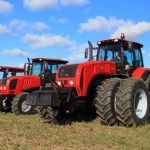
The tractors, imported from Belarus and unveiled by President Bola Ahmed Tinubu in June, will no longer be shared out freely as seen in previous interventions. Instead, the programme is being repositioned as a business-driven mechanisation ecosystem aimed at expanding access for millions of farmers while ensuring sustainability and accountability.
According to the Bank of Agriculture, the decision to delay distribution was deliberate. The bank says it needed time to design a framework that prevents political interference, waste and the concentration of public assets in the hands of a few individuals. From the 110,000 applications received nationwide, about 4,000 companies are currently being shortlisted, with the final number expected to drop to 2,000 qualified mechanisation service providers.
The tractors are expected to support dry-season farming from January, a period considered critical for boosting food production. Selection, the bank insists, will be strictly merit-based, with no political allocations allowed. Any tractor found to be linked to political interests will be repossessed.
Under the new model, the tractors are not meant for individual farmers. The bank argues that mechanisation is a service business, not a handout, and that allocating tractors directly to farmers cultivating small plots would exclude millions of others. Instead, only companies with verifiable financial capacity, strong balance sheets and the ability to pay a 25 per cent deposit will qualify. These companies will provide tractor services to farmers on a pay-per-use basis.
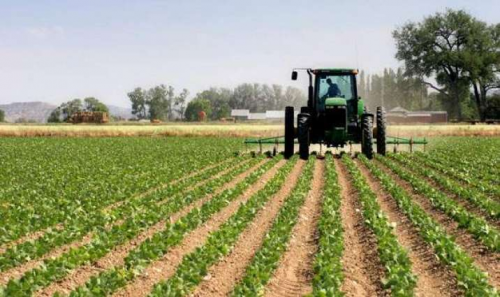
The approach is designed to multiply impact. With about 80 to 100 tractors allocated per state, farmers will be able to book services through a digital platform, allowing tractors to be deployed efficiently across farms. The bank estimates that 2,000 tractors can cultivate more than 100,000 hectares per farming cycle, reaching millions of farmers indirectly rather than benefiting a limited number of owners.
For smallholder farmers and agribusinesses, this model shifts the burden of ownership to service providers while creating a shared-access system. Each tractor’s work will be digitally recorded, with invoices generated automatically based on hectares covered. This is expected to improve transparency, repayment discipline and long-term viability.
The programme is also positioned as a growth strategy for mechanisation-focused MSMEs. Service providers are required to demonstrate the capacity to cultivate at least 500 hectares, ensuring that the tractors are used commercially and not left idle. Recovered funds from repayments will be reinvested to expand the fleet, with the long-term goal of scaling up from 2,000 to 40,000 tractors nationwide.
To address the persistent challenge of maintenance that has crippled past interventions, the bank says it has built an integrated support system. Mobile service trucks will handle routine maintenance on-site, while major repair hubs across the six geopolitical zones will manage complex faults. Thousands of spare parts have already been warehoused locally, eliminating dependence on foreign repairs.
Technology plays a central role in the new framework. Each tractor will be fitted with digital trackers that monitor location, usage, idle time and servicing needs. This, the bank says, will prevent diversion, extend the lifespan of the equipment and allow for swift repossession in cases of default.
Beyond deployment, the initiative also signals a shift towards local value addition. Plans are underway to establish a semi-knocked-down tractor assembly plant in Nigeria, with local technicians trained to assemble imported components. This move is expected to reduce costs over time, build technical skills and strengthen the domestic agricultural machinery value chain.
Stakeholders have largely welcomed the new approach. Farmer groups say the service-provider model addresses the long-standing problem of tractors being captured by elites and left unused. However, concerns remain around affordability. There are fears that the 25 per cent deposit required from service providers could translate into higher service charges for farmers, particularly smallholders already struggling with rising input costs.
Agricultural experts have described the model as ambitious and potentially transformative, noting that it promotes efficiency and continuous use of equipment. At the same time, they caution that safeguards must be put in place to ensure that smaller operators and farmers who are not digitally savvy are not excluded from accessing mechanisation services.
If successfully implemented, the programme could mark a turning point for Nigeria’s food production system, shifting agricultural mechanisation from sporadic government giveaways to a structured, service-driven market that supports MSMEs, improves productivity and strengthens food security at scale.