

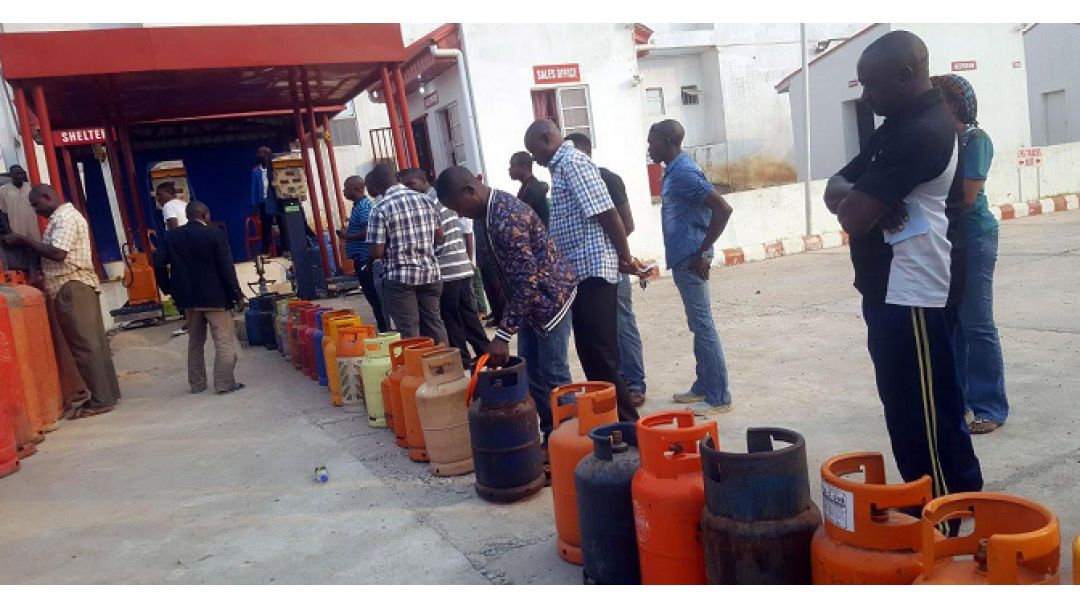
There is cautious optimism among liquefied petroleum gas retailers as cooking gas becomes more readily available across several states, selling at between N1,000 and N1,400 per kilogramme depending on location and seller.
A market survey shows that LPG availability improved towards the end of 2025, easing the severe scarcity that disrupted the market in September and October last year. Consumers in Lagos, Ogun, Oyo, and other states reported purchasing cooking gas at prices ranging from N1,050 to N1,400 per kilogram, while some major marketers were observed selling directly to consumers at around N900.
Retailers say the current price levels mark a notable improvement from the sharp spikes recorded during the supply disruption triggered by the shutdown of gas facilities amid a dispute between the Dangote refinery and the Petroleum and Natural Gas Senior Staff Association of Nigeria. During that period, LPG prices surged from an average of about N1,000 per kilogram to as high as N2,000 in some locations.
Despite the recent moderation, many households remain hopeful that prices will fall below N1,000 per kilogramme in the new year, arguing that more affordable rates are critical to encouraging wider adoption of clean cooking.
Industry representatives say the LPG market has become relatively stabilised, with some off-takers now receiving supplies through Apapa in Lagos. Retail prices at street outlets currently range between N1,300 and N1,400 per kilogramme, although prices may be lower at filling stations and gas plants, depending on neighbourhoods, logistics costs and distribution channels.
Retailers explained that they currently purchase LPG from major marketers at prices between N960 and N1,050 per kilogram. As a result, sellers offering gas below N1,000 per kilogramme are typically plant owners who sell directly to end users rather than through distributors or retail outlets.
For small retailers and gas distributors, the gradual return of supply has eased pressure on operations and reduced the risk of further price shocks. However, logistics costs, access to bulk supply and market concentration remain key factors influencing retail prices. For consumers and small food businesses that rely heavily on LPG, sustained price stability will be crucial to keeping operating costs manageable and supporting the shift away from dirtier cooking fuels.
The Dangote refinery had previously indicated plans to reduce LPG prices by selling directly to consumers, a move many market participants believe could further reshape pricing dynamics if implemented at scale.