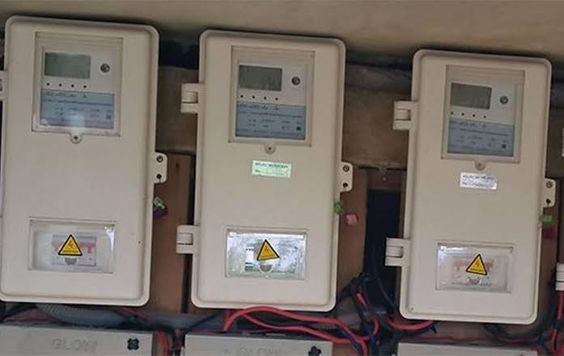
Electricity distribution companies have begun distributing prepaid meters to customers at no cost, marking a fresh push to close Nigeria’s long-standing metering gap, although early rollouts are concentrated largely among Band A and some Band B customers.
The development follows renewed pressure from the electricity regulator, which recently accused distribution companies of failing to collect and deploy hundreds of thousands of available meters despite government funding. At a recent power sector stakeholders’ meeting in Abuja, regulators disclosed that between 600,000 and 700,000 meters are currently available nationwide and challenged utilities to accelerate deployment and improve public communication, noting that public funds had already been committed to the programme.
Regulatory officials also criticised distribution companies for slow refunds under the Meter Asset Provider scheme, insisting that utilities should stop acting as though they are doing customers a favour by installing meters. Data reviewed by the commission showed weak compliance by some DisCos, with Abuja and Kano recording particularly low refund performance. Regulators warned that technical excuses for uninstalled meters were unacceptable, stressing that utilities should not collect money from customers if their networks were not ready for metering.
According to the regulator, failure to meter customers ultimately hurts the DisCos themselves, as uninstalled meters and faulty transformers translate into revenue losses. Concerns were also raised about outdated metering records, with more than 350,000 meters yet to be migrated to the new STS standard, prompting calls for an immediate cleanup of obsolete data.
Industry checks confirm that meter distribution is ongoing across multiple franchise areas. Electricity distributors say the meters are being deployed nationwide under an existing programme and are being provided to customers without upfront charges. However, the industry maintains that the meters are not entirely free, explaining that while the Federal Government facilitated procurement, the cost will be recovered from the DisCos over a ten-year period.
Industry representatives argue that limited meter availability remains a challenge and that the current rollout, while positive, is insufficient to close the gap entirely. They also clarified that customers who previously paid for meters under the Meter Asset Provider scheme are still entitled to refunds, which are credited gradually through electricity units. Poor customer communication, they admitted, has fueled mistrust, with many customers unaware that increased units during vending often reflect meter refunds rather than tariff changes.
Recent data from the regulator shows measurable progress in metering between September and October 2025, with nearly 188,000 customers newly metered nationwide. This pushed the national metering rate above 56 per cent, up from just over 55 per cent the previous month. During the same period, Nigeria’s active electricity customer base grew modestly, while the number of unmetered customers remained high at more than 5.3 million.
Performance across distribution companies remains uneven. Some urban-based DisCos continue to post high metering rates, while others, particularly in northern regions, remain below the 35 per cent threshold. Despite this disparity, sector observers say the recent acceleration suggests that sustained intervention could finally break years of stagnation in metering progress.
A key driver of the renewed rollout is the second phase of the Meter Acquisition Fund, under which the regulator approved the release of ₦28 billion to distribution companies to meter all outstanding Band A customers free of charge and fast-track coverage for Band B customers. The initiative forms part of the Presidential Metering Initiative aimed at eliminating Nigeria’s estimated seven-million-meter deficit.
Under the scheme, funds are allocated to DisCos based on market share, with strict timelines imposed for procurement, delivery and installation. Meter providers are required to deliver contracted meters within days, while payments are tied to verified installations to reduce delays and abuse.
For households and small businesses, particularly MSMEs that rely heavily on predictable power costs, the expanded metering drive could bring relief from estimated billing, which has long distorted operating expenses and undermined planning. Analysts note that wider access to prepaid meters would not only improve transparency for customers but also strengthen revenue assurance for utilities, creating a more balanced electricity market.
Despite recent gains, regulators caution that progress must be sustained. With millions of customers still unmetered, the success of the current rollout will depend on consistent enforcement, improved transparency, and the willingness of DisCos to treat metering not as an obligation forced by regulation, but as a core business priority critical to restoring trust in Nigeria’s power sector.