

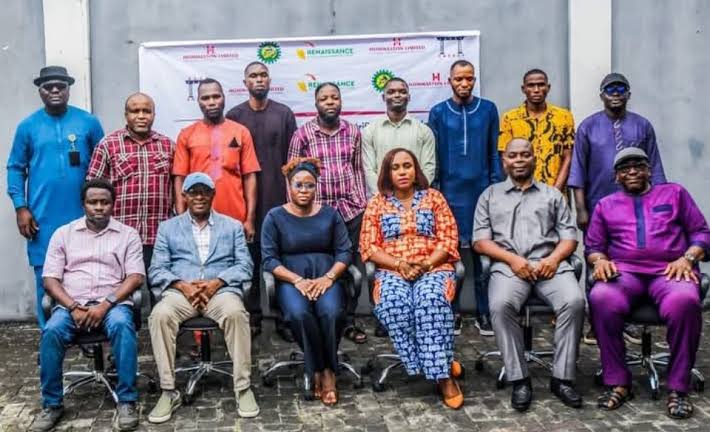
The Nigerian Content Development and Monitoring Board, in collaboration with Renaissance Africa Energy, Beam Energy, and Hamaston Limited, has launched a specialised training programme for six Nigerian graduates under the Community Electrification Interdependent Project.
The programme officially commenced on Tuesday at Hamaston Limited’s headquarters on Ogbatai Street, Woji, Port Harcourt, Rivers State, with representatives of all partner organisations in attendance.
Speaking on behalf of the NCDMB Executive Secretary, Felix Ogbe, the Board’s Manager of Human Capacity Development, Mrs Tarilate Biribena, described the initiative as a strategic intervention under the Board’s Project-Based Human Capital Development framework. She explained that the programme is targeted at addressing critical skills gaps while strengthening local technical capacity within Nigeria’s oil and gas value chain.
Ogbe noted that the training is structured to produce confident, competent, and industry-ready professionals, in line with NCDMB’s 10-Year Strategic Roadmap, which prioritizes the development of technical capabilities. He stressed that the initiative goes beyond short-term training, positioning participants to contribute meaningfully to industry growth and national development.
When addressing the trainees, Ogbe urged them to approach the programme with discipline, focus, and resilience, emphasising that the skills and knowledge gained are expected to translate into value creation and operational excellence across the sector. He described the project as a platform for nurturing future industrialists, innovators and change agents capable of helping Nigeria close its skills gap locally.
The Representatives of Beam Energy and Renaissance Africa Energy reaffirmed their commitment to the programme, encouraging both trainees and facilitators to ensure strong engagement and quality outcomes. They assured participants of sustained support throughout the training period, urging them to maximise the opportunity by delivering tangible value to the industry and the wider economy.
The initiative reflects growing collaboration between public institutions and private firms to build local expertise, particularly in areas such as community electrification that have implications for energy access, industrial growth, and small business development.