

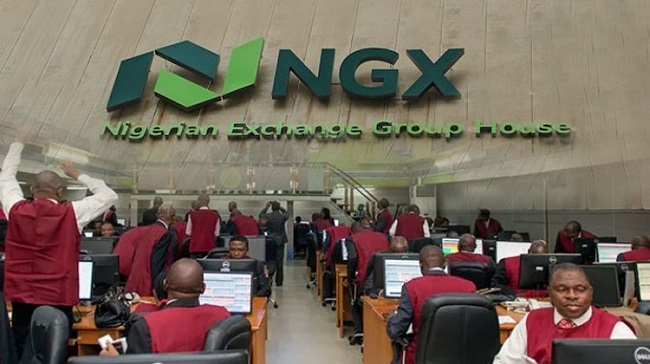
The Nigerian Exchange Group has launched its Net Zero Initiative, signalling a strategic push to embed climate action and sustainability into Nigeria’s capital market as global investors tighten environmental and climate requirements.
The initiative aims to help Nigerian companies meet increasingly stringent sustainability standards demanded by international investors, while unlocking access to long-term, climate-aligned capital. It comes shortly after President Bola Ahmed Tinubu signed Nigeria’s Carbon Market Initiative, reinforcing growing policy backing for emissions reduction and climate finance.
Speaking at a closing gong ceremony in Lagos to mark the launch, NGX Chairman, Temi Popoola, said the initiative represents the Exchange’s response to both global and local sustainability pressures. He noted that international development finance institutions are now applying rigorous environmental, social and governance standards before committing capital, making alignment essential for Nigerian corporates seeking foreign investment.
According to Popoola, institutions such as Germany’s development finance institution, DEG, now place strong emphasis on ESG and climate compliance, raising the question of how Nigeria’s capital market can support local companies to meet these expectations. He said the Net Zero Initiative is designed to bridge the gap between opportunity and execution by building capacity across the market ecosystem and enabling corporates to unlock climate-aligned funding.
He highlighted DEG’s longstanding contribution to Nigeria’s capital market, noting that Nigerian banks, private equity firms and pre-listing companies have benefited from DEG-backed financing over the years. He also acknowledged the role of DEG’s outgoing Country Director, Ben, whose seven-year tenure helped strengthen the private sector and deepen the capital market.
NGX Chief Executive Officer, Jude, said the Exchange is committed to leading by example on the Net Zero agenda, which he described as a defining feature of modern capital markets. He explained that the initiative goes beyond listed companies, with structured capacity-building programmes designed to prepare market participants for sustainability-focused investing.
He added that at least 30 participants across the market will receive training on climate and sustainability, stressing that the focus is shifting from simple access to capital to sustainable value creation. According to him, profitability alone is no longer sufficient, as corporations are now expected to generate measurable social and environmental impact alongside financial returns.
Representing DEG, Chief Investment Officer, Monika Beka, described the launch as a milestone that highlights the critical role of capital markets in driving private sector-led development. She reaffirmed DEG’s strong interest in Africa, identifying Nigeria as a priority market and emphasising that sustainability and profitability reinforce each other over the long term.
Ben, DEG’s outgoing Country Director, also restated the institution’s confidence in Nigeria’s private sector, describing it as a key driver of responsible economic growth. He said DEG remains committed to supporting the continued development of Nigeria’s capital market.
With the Net Zero Initiative, the Nigerian Exchange is positioning the capital market as a central platform for financing climate-aligned growth, strengthening investor confidence and preparing Nigerian businesses, including MSMEs across value chains, for a future where sustainability and capital formation are increasingly inseparable.