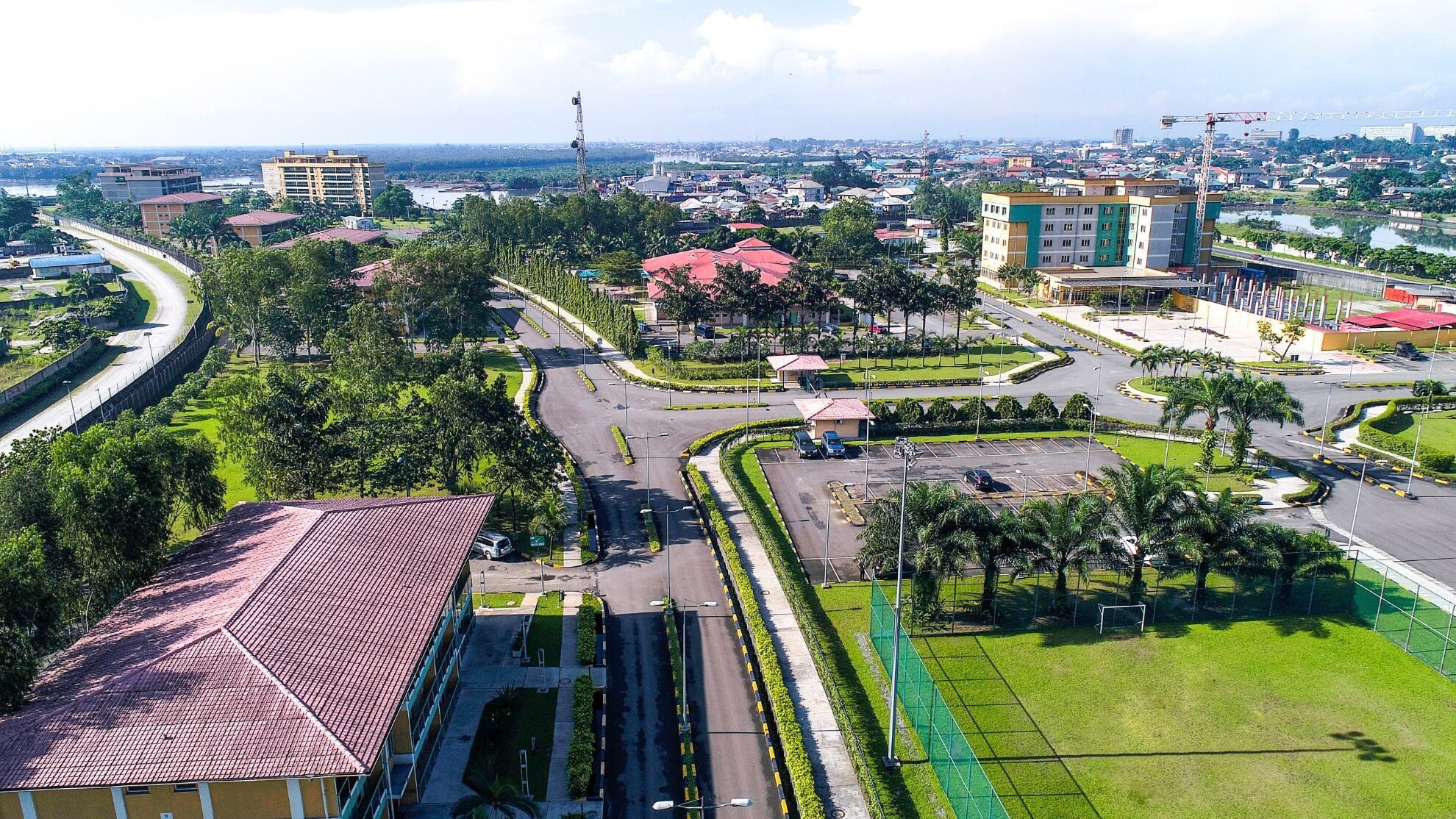


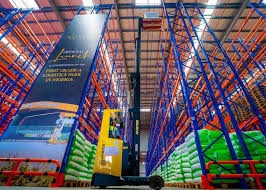
Nigeria has strengthened its bid to become West Africa’s logistics gateway with the commissioning of the region’s first Grade-A warehousing facility, a move expected to reshape trade flows across an $11 billion market. TY Logistics Park FZE on Monday opened its 29,000-square-meter flagship warehouse in the Lekki Free Zone, marking a major leap toward modern contract logistics in a region long constrained by storage deficits, slow cargo turnaround, and costly supply chain delays.
It is located beside the Lekki Deep Sea Port and close to the proposed international airport. The facility offers over 45,000 pallet positions and runs a fully automated Warehouse Management System, promising 99.99 percent inventory accuracy. Company executives said the park is designed to eliminate longstanding logistics bottlenecks that raise operational costs for manufacturers, importers, and exporters. At the commissioning, the chairman described the project as a platform that tackles inefficiencies and positions Nigeria competitively for regional commerce. Lagos State’s governor said the investment aligns with the state’s push for private-sector-driven industrial growth across the Lekki corridor.
The launch comes at a time when the AfCFTA continues to expand opportunities for regional trade, heightening demand for compliant, technology-driven logistics infrastructure. For years, fragmented warehousing and poor handling standards have hindered trade in pharmaceuticals, FMCG, electronics, and agro-products, often resulting in inventory damage and revenue losses. The managing director of TY Logistics Park framed the challenge in economic terms, noting that businesses often lose money to slow processing and unreliable storage and said the new facility is built as a centralized, systems-driven logistics engine for Nigeria and neighbouring markets. The warehouse features SOPs tailored to sensitive sectors and offers services such as cross-docking, pick-and-pack, and import-export processing within the Free Zone regime.
Environmental integration forms part of the design, with solar-ready systems, EDGE certification, and electric handling equipment reflecting growing sustainability expectations from global clients. The project also sits within the Alaro City industrial ecosystem, whose developers say integrated industrial-residential planning improves Nigeria’s appeal for foreign investment and manufacturing expansion.
Interest in logistics infrastructure across Nigeria, Ghana, Ivory Coast and surrounding markets has risen, but supply has lagged behind demand, especially where cold chain, pharma-grade storage, and real-time tracking capability are required. The $11 billion addressable market TY Park is targeting reflects the expanding value of warehousing and distribution services as e-commerce scales and manufacturers seek regional consolidation points. Client onboarding has begun ahead of full commercial operations in the coming weeks, and industry analysts expect operators and investors to watch performance closely as they assess Nigeria’s readiness to serve as a regional distribution base.
For MSMEs involved in manufacturing, export, retail and agro-processing, the rollout of Grade-A warehousing could offer a pathway to reduce transit losses, improve storage quality, and support entry into wider markets across West Africa. The longer-term test will be how the facility navigates persistent challenges around power, transport systems and regulatory predictability, issues that continue to influence Nigeria’s competitiveness against more developed logistics hubs in East and Southern Africa.