

Nigeria and the United Arab Emirates are exploring strategic collaboration to boost the development of Nigeria’s commodity ecosystem, with the potential to unlock more than $400 billion in opportunities for micro, small and medium enterprises (MSMEs).
The partnership, involving the Lagos Commodities and Futures Exchange (LCFE), is aimed at mobilising private-sector investment and positioning Nigeria as a gateway to Africa’s estimated $1 trillion commodities market, covering agriculture, energy, gold, lithium and other strategic resources.
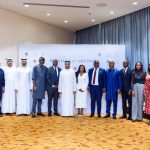
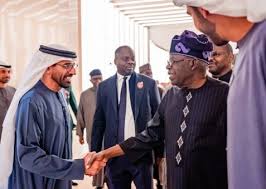
The collaboration was discussed during a courtesy visit by the UAE Ambassador to Nigeria, Salem Saleh Omar Al Jaberi, to the LCFE, where stakeholders highlighted the importance of private-sector-led initiatives in driving efficiency, infrastructure development and capital formation across the commodities value chain.
Managing Director of the LCFE, Akin Akeredolu-Ale, said Nigeria alone represents about $400 billion in commodity opportunities and that deeper engagement with the UAE would accelerate investments in lithium processing, livestock development, food security and structured commodities trading, creating expanded market access for MSMEs.
He noted that the exchange is strengthening its ecosystem of dealing member firms and commodity brokers, while promoting gold trading through LBMA-standard bars stored in Free Trade Zones. This structure allows tariff-free access for institutional investors, including pension funds, while supporting MSMEs involved in mining, aggregation, logistics and processing.
Akeredolu-Ale also disclosed that LCFE is increasing its participation in large-scale rice production, livestock and fodder development, and export-ready organic produce, with memoranda of understanding already signed with some state governments. He added that the UAE has been granted first right of refusal on selected commodity exports.
He further pointed out that recent reforms decentralising electricity generation have opened new private investment opportunities in metering, revenue collection and infrastructure optimisation, areas where MSMEs can play a significant role.
“These initiatives underscore LCFE’s commitment to leveraging private-sector partnerships to drive inclusive growth, deepen Nigeria’s commodities markets and strengthen the country’s position as a hub for Africa’s rapidly expanding commodity economy,” he said.
Also speaking, Director-General of AIM Congress, Walid Farghal, called for increased participation in commodities trading, particularly among entrepreneurs and young business owners. He emphasised the role of digitisation, tokenisation and transparent market structures in attracting global investors and improving liquidity.
The proposed Nigeria–UAE partnership is expected to strengthen value chains, expand export opportunities and improve access to finance and markets for MSMEs operating across Nigeria’s commodities ecosystem.