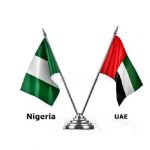
The Federal Government has signed a Comprehensive Economic Partnership Agreement (CEPA) with the United Arab Emirates (UAE), a move expected to significantly expand trade, boost exports, and create new opportunities for Nigerian businesses, particularly micro, small and medium enterprises (MSMEs).
A member of the Governing Board of the North East Development Commission, Rep. Sam Onuigbo, disclosed this in an interview with the News Agency of Nigeria (NAN) in Abuja. He described the agreement, signed during the Abu Dhabi Sustainability Week held from January 11 to 15, as a major breakthrough for Nigeria’s trade and investment landscape.
According to Onuigbo, under the CEPA signed in January 2026, the UAE will remove tariffs on 7,315 Nigerian products. Of these, 2,805 products representing about 38.3 per cent—will enjoy immediate duty-free access, while tariffs on the remaining products will be phased out over a period of three to five years. The agreement covers a wide range of agricultural and industrial goods.
Similarly, Nigeria has eliminated tariffs on 6,243 products imported from the UAE, creating what Onuigbo described as a mutually beneficial framework that strengthens trade flows and business cooperation between both countries.
“This agreement is massive. It creates an enabling environment for Nigerian businesspeople, especially those running verifiable and identifiable enterprises, to access the UAE market, open offices, operate for a few months, and return with stronger networks and expanded business opportunities,” he said.
Onuigbo noted that the deal is expected to support job creation, improve market access for Nigerian exporters, and encourage MSMEs to scale beyond local markets. He commended President Bola Tinubu for driving the agreement, describing it as a strategic step towards repositioning Nigeria as a competitive business destination.
He added that the CEPA aligns with broader government efforts to stimulate economic growth, attract foreign investment, and strengthen private-sector participation in key industries.
Beyond trade, Onuigbo highlighted Nigeria’s growing engagement in climate and energy reforms, noting that the country’s carbon market framework policy was also unveiled during the Abu Dhabi summit. He said Nigeria’s participation signalled its readiness to engage globally on sustainable development and economic transformation.
Nigeria, with a population nearing 250 million, has long faced challenges related to energy supply and infrastructure, which have constrained industrial growth. Onuigbo said the government has taken deliberate steps to address these gaps through initiatives such as the Energy Transition Plan, the Climate Change Act, and the Electricity Act, which was signed shortly after the current administration assumed office in 2023.
“These reforms show how seriously Nigeria is taking the issue of energy and electricity, which are fundamental to industrial development and economic competitiveness,” he said.
He further noted that Nigeria’s participation at the Abu Dhabi Sustainability Week would deepen economic collaboration with the UAE, open up new global business opportunities, and support efforts to address climate change while strengthening the economy in 2026 and beyond.
Overall, the Nigeria–UAE CEPA is expected to lower trade barriers, improve export competitiveness, and provide Nigerian MSMEs with greater access to international markets, positioning the country as a key player in regional and global trade.