

• News
  • Business
  • Opportunities
    • Articles & Resources
  • Spotlight
  • Views
    • Interviews
    • Opinions
  • MSME Jobs
  • More
    • Africa
    • World
  • webmail
  • Terms of Use
MSME Africa
  • News
  • Business
  • Opportunities
    • Articles & Resources
  • Spotlight
  • Views
    • Interviews
    • Opinions
  • MSME Jobs
  • More
    • Africa
    • World
  • webmail
  • Terms of Use
No Result
View All Result
  • News
  • Business
  • Opportunities
    • Articles & Resources
  • Spotlight
  • Views
    • Interviews
    • Opinions
  • MSME Jobs
  • More
    • Africa
    • World
  • webmail
  • Terms of Use
No Result
View All Result
MSME Africa
No Result
View All Result

Nigerians Maintain High ATM Usage Despite Increased Fees, Cash Remains Dominant

Olusola Blessing by Olusola Blessing
January 19, 2026
in Business, News
0
Nigerians Maintain High ATM Usage Despite Increased Fees, Cash Remains Dominant
Share

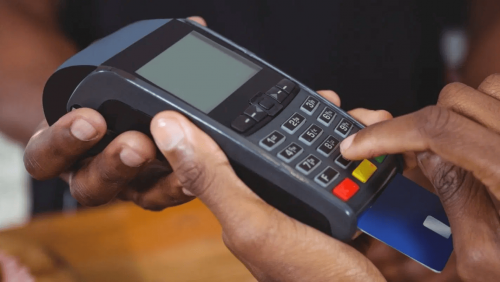
Despite higher charges introduced by the Central Bank of Nigeria in March 2025, Nigerians continued to rely heavily on ATM withdrawals, with the total value of transactions reaching N36.34 trillion in the first half of the year. This represents nearly a threefold increase from N12.21 trillion recorded in the same period of 2024, highlighting the persistent demand for cash in the economy.


Data from the CBN’s quarterly statistical bulletin shows that between January and June 2025, ATM withdrawals totaled 858.8 million transactions, up from 496.47 million a year earlier, marking a 72.98 per cent rise in volume. The surge came even after the apex bank revised its fee structure, charging N100 per N20,000 withdrawn from other banks’ ATMs, with additional surcharges of up to N500 for offsite locations such as malls, airports, and fuel stations. The previous allowance of three free monthly withdrawals on other banks’ ATMs was removed.

Quarterly breakdowns illustrate the momentum. In the first quarter, Nigerians withdrew N15.97 trillion from ATMs, a 192.9 per cent increase over N5.46 trillion in the first quarter of 2024. Volumes rose from 210.66 million to 411.42 million transactions. The second quarter saw withdrawals climb to N20.36 trillion, more than triple the N6.75 trillion recorded in the same period of 2024, with transaction volumes rising to 447.39 million. Monthly figures confirm consistent growth, with May 2025 recording the highest withdrawal value at N7.44 trillion.


The continued preference for cash contrasts with the steady expansion of point-of-sale transactions. POS transaction values rose from N85.91 trillion in the first half of 2024 to N147.20 trillion in the same period of 2025, while volumes increased from 6.4 billion to 7.72 billion transactions. Yet, the pace of growth in ATM withdrawals outstripped that of POS channels, underscoring cash’s enduring role in everyday economic activity.

The fee revision has drawn criticism. FinTech executive Tope Dare warned it disproportionately affects low-income Nigerians, who typically withdraw smaller amounts, while wealthier individuals can avoid the fees more easily. The consumer rights group SERAP also filed legal action against the CBN, calling the fees “unfair, unreasonable, and unjust.” Similarly, the Trade Union Congress urged Nigerians to reject the policy, describing it as exploitative.


Some, however, defended the move. Dr. Uju Ogubunka, Chairman of the Bank Customers Association of Nigeria, acknowledged the increase was expected given the state of the economy but questioned the extent of the hike and its affordability.

The CBN has also introduced reforms to improve consumer protection. In October 2025, it mandated that banks refund customers for failed ATM transactions within 48 hours and set minimum ATM deployment targets to improve access: one ATM for every 5,000 active cards, with phased compliance reaching full coverage by 2028.


Despite efforts to encourage electronic payments, cash outside banks continues to rise. In November 2025, Nigerians held N4.91 trillion outside the banking system, up from N4.65 trillion in October. Currency in circulation reached N5.26 trillion, with about 93 per cent held outside banks.

The preference for cash raises macroeconomic concerns. Large holdings outside the banking system reduce deposit mobilisation, complicate monetary policy, and increase informal transactions. These trends challenge the CBN’s efforts to tighten liquidity and control inflation, highlighting the resilience of cash in Nigeria’s economy.


Post Views: 8
Share

Related Posts:

  • The blood profits of Nigerian banks
    The blood profits of Nigerian banks
  • Call For Applications: Google Apprenticeships Program For Youth Worldwide
    Call For Applications: Google Paid Apprenticeships…
  • AfCFTA: MAN President Calls for Policies and Regulations Against Dumping
    2nd Half 2020 : Manufacturer Production value grew…
  • images (43)
    Inflation Eases to 20.12% but Small Businesses Say…
  • Nigeria’s Foreign Trade Drops Amid Rising Inflation
    Nigeria’s Foreign Trade Drops Amid Rising Inflation
  • Banks Shut 229 Branches in One Year As POS Becomes Nigeria’s Dominant Payment Channel
    CBN Confirms N100 ATM Withdrawal Fee Below N20,000
Tags: ATM WithdrawalsBanking FeesCash UsageCentral Bank of NigeriaConsumer ProtectionElectronic PaymentsFinancial InclusionMonetary PolicyNigeria EconomyPOS Transactions
Previous Post

NITDA Reaffirms Nigeria–US Collaboration on Data Privacy, AI and Cybersecurity

Next Post

Federal Government Allocates Less Than 1% of 2026 Budget to Poverty Alleviation as Poverty Rate Rises

Next Post

Federal Government Allocates Less Than 1% of 2026 Budget to Poverty Alleviation as Poverty Rate Rises

Leave a Reply Cancel reply

Your email address will not be published. Required fields are marked *

No Result
View All Result
Join MSME on Whatsapp
Subscribe To Our Newsletter
Enter your email to receive a weekly round-up of our best posts. Learn more!
icon
By subscribing, you agree with our privacy policy and our terms of service.

Recent Posts

  • Federal Government Allocates Less Than 1% of 2026 Budget to Poverty Alleviation as Poverty Rate Rises
  • Federal Government Allocates Less Than 1% of 2026 Budget to Poverty Alleviation as Poverty Rate Rises
  • Nigerians Maintain High ATM Usage Despite Increased Fees, Cash Remains Dominant
  • NITDA Reaffirms Nigeria–US Collaboration on Data Privacy, AI and Cybersecurity
  • UBA Foundation Distributes Millions in Aid Across Nigeria and 19 African Countries

Recent Comments

  • 10 Reasons Why SMEs Should Invest in Video Marketing - MSME Africa on How to Create Viral Videos for Social Media in 2024
  • link alay4d on 5 Nigerian-based Companies Providing Accelerator Programs for Startups in 2024
  • Damilare Oladeji on Nigerian Government Agencies that Support Entrepreneurship in 2024
  • situs alay4d on 50 Best Tools to Boost Your Productivity as an Entrepreneur in 2025
  • Otabor Osayomore Blessing on Ultimate 2025 Guide to the Top Business Enabling Cities for Startup Founders and Entrepreneurs in Nigeria
  • About us
  • Advertise with Us
  • Contact Us
  • Home
  • News
  • Newsletter
  • Submit News
  • Terms of Use

© 2023 MSME Africa - All rights reserved.

No Result
View All Result
  • Home
  • News
  • Business
  • Financial Services
  • Opportunities
  • About Us

© 2023 MSME Africa - All rights reserved.