

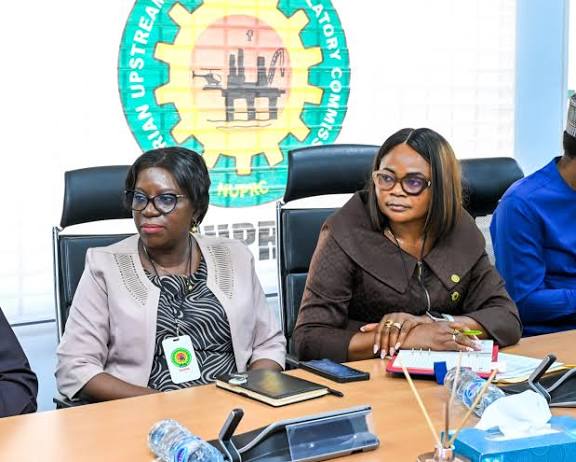
The Nigerian Upstream Petroleum Regulatory Commission (NUPRC) and the Nigerian Midstream and Downstream Petroleum Regulatory Authority (NMDPRA) have pledged closer collaboration to enhance regulatory efficiency and attract investment in the country’s oil and gas sector.
The agencies agreed to institutionalise quarterly meetings to strengthen communication, resolve sector challenges swiftly, and align regulatory approaches across the upstream, midstream, and downstream segments of the industry.
Speaking at the meeting, NUPRC Chief Executive Oritsemeyiwa Eyesan highlighted the importance of synergy between the two regulators, noting that their coordinated effort is crucial to supporting industry growth. “Whether we are talking about the upstream, midstream, or downstream, we are enablers for the industry, and without a doubt, we know that the industry is the heartbeat of the nation’s economy. So, we are committed to ensuring that things work properly and the industry grows astronomically,” she said.
Eyesan stressed that effective collaboration is necessary given the overlapping areas between upstream, midstream, and downstream operations, adding that the meeting marks “the beginning of many more interactions” aimed at fostering efficiency and growth. She also invited the NMDPRA Chief Executive to the pre-bid conference for the ongoing licensing round in Lagos on January 14, 2026, which offers 50 oil and gas blocks and is expected to attract significant domestic and foreign investment.
Responding, NMDPRA Chief Executive Saidu Mohammed emphasised the historical ties between the agencies, noting that both emerged from the former Department of Petroleum Resources. He called for stronger collaboration, describing the agencies as “brother and sister” entities that must work in harmony to support the sector.
The renewed partnership signals a commitment to regulatory efficiency, investor confidence, and sustainable growth in Nigeria’s oil and gas industry, promising long-term benefits for the nation’s economy.
This initiative aligns with broader government efforts to strengthen Nigeria’s business ecosystem, following other programmes such as Unity Bank’s Corpreneurship Challenge, which supports youth-led businesses across sectors including agribusiness, fashion, food processing, manufacturing, and creative services. Both initiatives reflect a growing focus on fostering sustainable economic development through investment and entrepreneurship.