The Ogun State government has announced that more than 72,000 residents have benefited from a wide range of agricultural support and skills development programs implemented under the Ogun State Economic Transformation Project (OGSTEP), a five-year World Bank–assisted initiative scheduled to end on December 31, 2025.
According to the government, the beneficiaries include 39,000 individuals trained under the skills development component and 33,075 farmers supported with inputs, feeds, mechanization services, and other interventions to boost productivity.
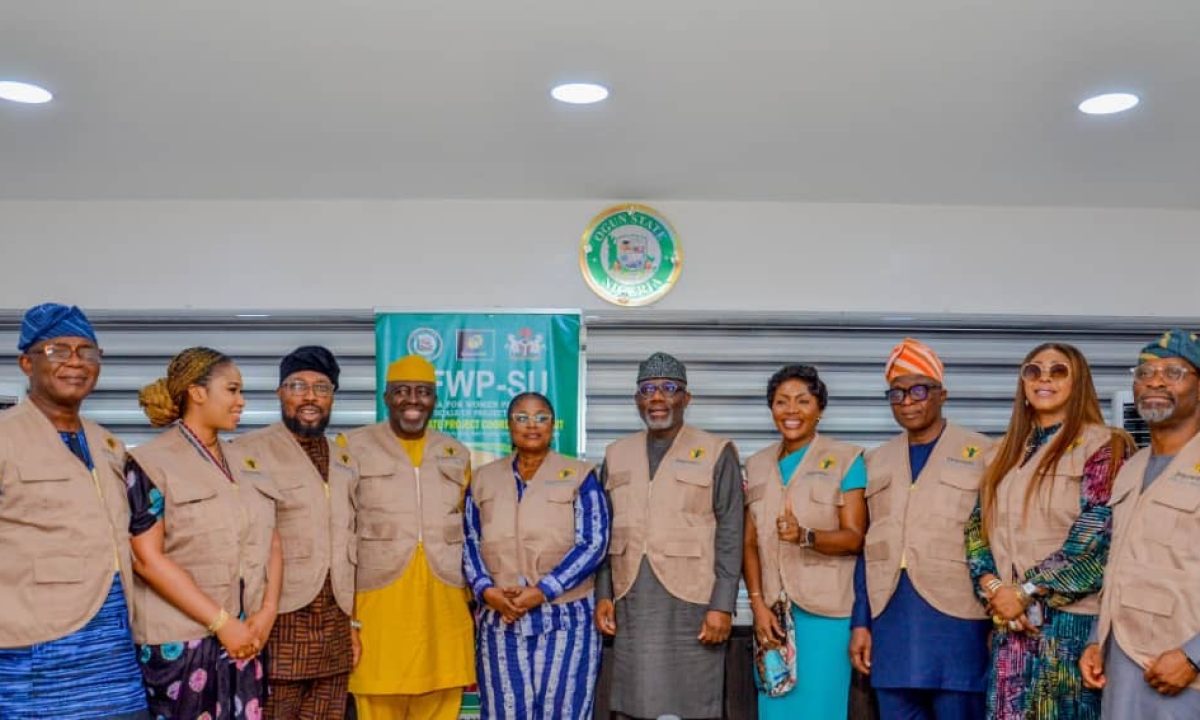
The Chairman of the Project Steering Committee, Mr. Dapo Okubadejo, made this known on Monday during the 8th and final Implementation Support Mission of OGSTEP held in Abeokuta.
Okubadejo, who also serves as the Commissioner for Finance and Chief Economic Adviser to Governor Dapo Abiodun, said the results achieved reflect the state’s bold economic vision to drive institutional strengthening, human capital growth, and improved economic opportunities.
He explained that OGSTEP has so far facilitated the issuance of more than 15,000 Certificates of Occupancy, rehabilitated seven zonal e-planning and land administration centres, and deployed a modern GIS/Remote Sensing platform aimed at improving transparency and efficiency in land processes.
Giving a breakdown of the agricultural interventions, Okubadejo said: “OGSTEP has directly supported 33,075 farmers statewide, including 27,547 crop farmers, 4,256 aquaculture farmers, and 1,272 poultry farmers. Support covered the mechanisation of 9,014 hectares, the delivery of 90,431 litres of agrochemicals, and 17,945 bags of fertilisers.
“Aquaculture farmers received 195,436 bags of nutritious fish feed, while poultry farmers benefited from 77,703 bags of poultry feed and rehabilitated poultry pens. To date, agribusiness firms have off-taken 283,582 tonnes of agricultural produce under the project.”
He added that in the area of skills development, OGSTEP has empowered over 39,000 individuals, including 1,400 STEM teachers, 100 Quality Assurance Officers, 120 technical instructors, over 4,000 vocational trainees, 120 ministry personnel, more than 17,000 farmers, youths, and women, and 60 artisans.
Furthermore, eight technical colleges were rehabilitated and upgraded, while laboratories for 22 flagship schools and four Education Resource Centres were fully refurbished and equipped, bringing the total number of institutions completed to 34.
Okubadejo commended the project team for its professionalism and dedication, urging all beneficiaries to make judicious use of the support received to further strengthen the state’s economic prospects.
Also speaking, Chairman of the Project Technical Committee and Commissioner for Budget and Planning, Mr. Olaolu Olabimtan, described the achievements as products of strong partnerships and disciplined implementation. He praised Governor Abiodun for providing the policy direction that enabled OGSTEP to thrive and acknowledged the World Bank Task Team for its technical guidance.
“This final mission is a defining moment that reflects years of planning, hard work, and collaboration. Governor Abiodun’s political will and steadfast support have been the bedrock of the project’s progress,” he said.
OGSTEP Project Coordinator, Mosunmola Owo-Odusi, stated that the program has, over the past five years, transformed the state’s agricultural landscape—from predominantly peasant farming to more organized, market-oriented systems supported by cooperative structures, CAC registration, and business plans.
She said the project has also unlocked land value for citizens and government, created wealth through improved land administration, and achieved significant progress in clearing the backlog of unprocessed land titles. The deployment of high-tech survey equipment and GIS/CORS infrastructure across the state, she added, has strengthened geospatial capacity.
Owo-Odusi stressed that sustaining these gains depends largely on regulators and implementing agencies. She urged ministries and other stakeholders to protect and build on the existing investments to ensure long-term impact.
The OGSTEP project, which commenced in 2020, aims to increase private-sector participation in the state’s economy and support its transition into a high-income, competitive environment through reforms and targeted investments. It focuses on three pillars: improving the business-enabling environment, strengthening agri-food value chains and upgrading skills for rapid development.
Ultimately, the project seeks to drive sustainable economic growth and inclusive prosperity for all citizens by addressing key barriers to diversification and development across the state.