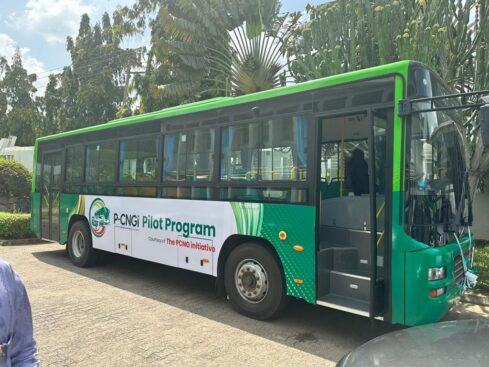


Nigeria’s push to expand cleaner transport energy gained momentum after the Presidential Initiative on Compressed Natural Gas and Electric Vehicles signed a Memorandum of Understanding with a Chinese technology firm to boost in-country production of critical sector infrastructure.
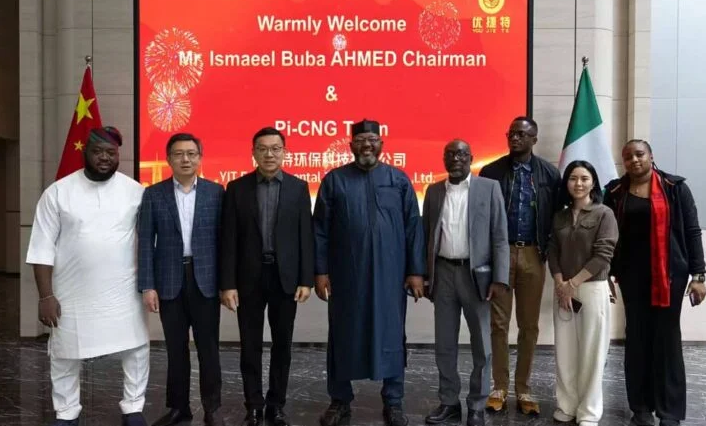
The agreement was sealed during a five-day working visit to factories and corporate offices of You Jie Te Environment Technology Ltd in Chengdu and Hangzhou, China, where a Nigerian delegation engaged the firm on manufacturing capacity, technology transfer and long-term collaboration.
You Jie Te Environment Technology Ltd is a major Chinese provider of infrastructure and Internet of Things solutions for the downstream oil and gas sector. According to a statement from the initiative’s secretariat in Abuja, the partnership is designed to support Nigeria’s energy transition by localising the manufacturing and assembly of key infrastructure such as compressed natural gas dispensers, refuelling stations and electric vehicle charging facilities.
Beyond physical infrastructure, the agreement places strong emphasis on digital integration. Under the MoU, advanced IoT technologies from the Chinese firm will be deployed to strengthen Nigeria’s CNG and EV ecosystem. These smart monitoring solutions will work alongside the National Gas Vehicle Monitoring System, providing real-time visibility into refuelling equipment performance, safety standards, regulatory compliance and economic data across stations nationwide.
The initiative’s leadership said the collaboration goes beyond hardware, positioning local manufacturing as a catalyst for wider economic benefits. The deal is expected to support job creation, skills development and improved service reliability while reducing dependence on imported equipment.
By combining local production with smart monitoring technologies, the partnership is expected to improve transparency, safety and operational efficiency across the CNG and EV refuelling value chain, delivering more reliable services for commuters and operators while supporting Nigeria’s broader economic and energy transition goals.