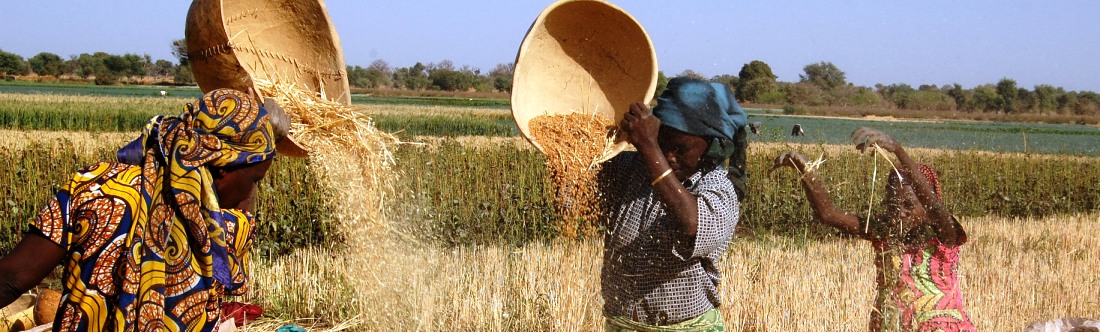



Agricultural trade between the United States and Nigeria is projected to exceed $700 million in 2025, according to an update shared by the U.S. Mission in Nigeria via X on Tuesday. The Mission noted that the surge is driven largely by growing wheat imports into the country to meet domestic food demand. Wheat remains central to Nigerian staples, including bread, pasta, noodles, pastries and bakery products, and the increasing consumption means imports continue to fill the gap as local production still lags behind.
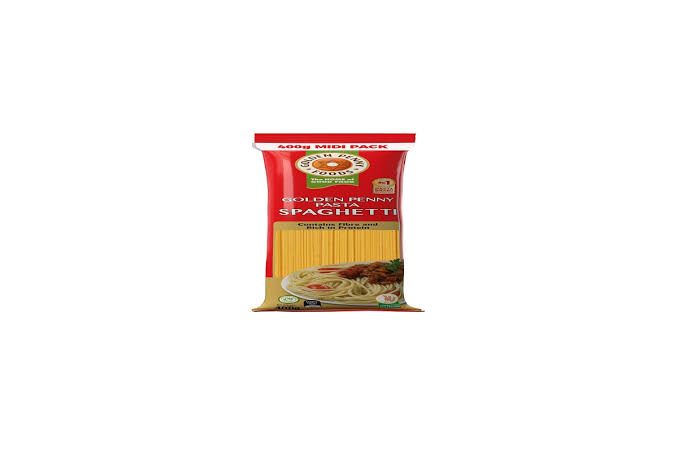
The U.S. Mission explained that Flour Mills of Nigeria (FMN) plays a leading role in the value chain, driving a significant portion of U.S. wheat shipments into the country. It described FMN as one of the largest importers, supplying popular products such as Golden Penny flour, noodles and pasta to households and businesses nationwide, with distribution extending across West Africa. The demand keeps millers active and reinforces the dependence of bakeries and food manufacturers on foreign wheat.
Trade data cited from Nairametrics show that in the first quarter of 2025, the United States exported goods worth N1.42 trillion to Nigeria, representing 9.22 per cent of total imports. China maintained the top position with N4.66 trillion, nearly a third of Nigeria’s total imports, followed by India with N1.72 trillion worth of products. Imports from the Netherlands, Belgium, Spain, the UK, UAE, Brazil and Saudi Arabia also contributed, mostly in machinery, industrial goods and food products. On the export side, Europe remained Nigeria’s biggest market with N8.64 trillion in goods, while Asia followed with N6.75 trillion. Exports to America were valued at N3.33 trillion, or 16.16 per cent of the total.
Nigeria consumes an estimated five to six million metric tonnes of wheat annually, yet local production remains insufficient. To manage shortfalls and mitigate rising food costs, the federal government last year approved a 150-day duty-free import window for maize, husked brown rice and wheat. Authorities also continue to pursue domestic production strategies under the National Agricultural Growth Scheme-Agro Pocket initiative. During the 2024/2025 dry season, 250,000 farmers received subsidised seeds and fertiliser aimed at cultivating 250,000 hectares and yielding up to 750,000 metric tonnes of wheat.
The government further launched its 2025/2026 wheat farming programme targeting 80,000 registered farmers across 16 producing states. Expected output for the cycle is valued at about N160 billion. To support expansion and stabilise supply, Nigeria secured a 134 million dollar loan from the African Development Bank for seed improvement and grain production. The plan spans both wet and dry seasons and is expected to strengthen food security, while widening opportunities for millers, processors and MSMEs within the agricultural value chain.
The growth in trade signals a widening market for farmers and agribusiness players in both countries. For small businesses in Nigeria, especially those in milling, baking, logistics and food retail, sustained wheat availability could help stabilise production costs even as the country works to boost self-sufficiency in grains.