

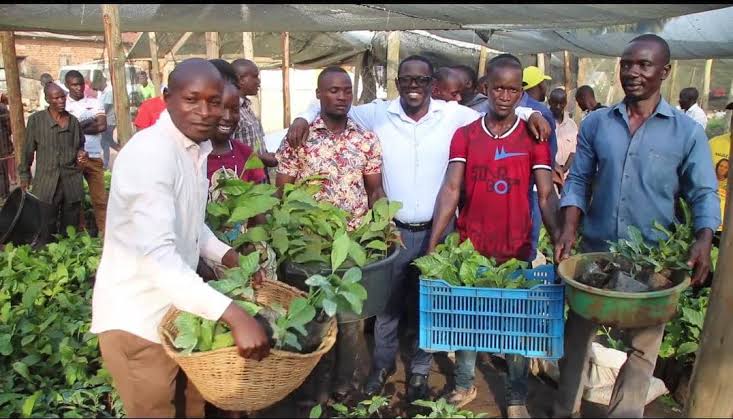
The Ugandan government has distributed 8,000 modern coffee seedlings to farmers in Masaka District as part of efforts to increase production, raise household incomes and strengthen national poverty eradication initiatives, while also encouraging greater youth participation in agriculture.
The seedlings were handed over through the office of former Vice President Edward Kiwanuka Ssekandi, with beneficiaries drawn mainly from Kyannamukaaka and Kyesiiga sub-counties. Masaka is one of Uganda’s key coffee-producing areas, and officials say the intervention is expected to improve yields, support smallholder livelihoods and reinforce coffee’s role as a dependable cash crop.
The programme aligns with the Buganda Kingdom’s “Emwanyi Terimba” campaign, which promotes coffee farming as a sustainable source of income and a pathway out of poverty. At the handover ceremony in Bulegeya Village, an aide to the former vice president said the government sees agriculture, particularly coffee, as a practical solution to youth unemployment and long-term economic insecurity.
He noted that encouraging young people to take coffee farming seriously could help them secure stable incomes and reduce poverty, while also strengthening Uganda’s position in regional and global coffee markets. He added that complementary government support, especially access to fertilisers, would be critical to improving crop quality and productivity, and called for livestock programmes to support farmers without access to land.
The officials involved in the distribution urged beneficiaries to plant and properly manage the seedlings rather than reselling them, stressing that the real value lies in long-term cultivation and sustained income generation. Agricultural extension workers also advised farmers to seek guidance from trained officers to avoid losses linked to poor planting and farm management practices.
While farmers welcomed the seedlings, they raised concerns about persistent challenges in the coffee sector, including coffee wilt disease, the rising cost of fertilizers and the circulation of counterfeit agro-inputs. These issues, they noted, continue to limit productivity and profitability for small-scale farmers and agribusinesses.
For Uganda’s broader economy, the intervention highlights the role of agriculture-led growth in poverty reduction and job creation, particularly for young people and rural communities. With coffee remaining one of the country’s most important export crops, targeted support for farmers could also strengthen value chains, support small agro-processors and improve income stability across producing regions.