

The United States has officially added Nigeria to a new list of countries facing travel restrictions, following a presidential proclamation signed by President Donald Trump as part of a broader effort to tighten border controls and strengthen national security screening.
Under the proclamation, Nigeria has been placed under partial travel restrictions, affecting both immigrant and selected non-immigrant visa categories. The White House said the decision followed what it described as data-driven assessments of security risks, vetting gaps and immigration compliance patterns. While some countries were placed under full travel bans, Nigeria falls into a middle category alongside 14 others facing limited suspensions.
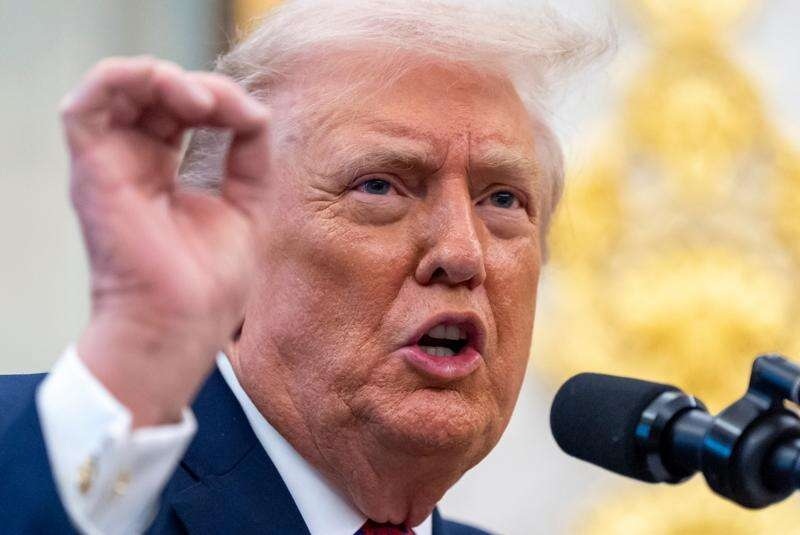
Announcing the policy, President Trump said the measures were necessary to protect Americans, stressing that border security remains a core responsibility of his administration. The proclamation stated that the restrictions are intended to prevent the entry of individuals about whom the United States lacks sufficient information to properly assess potential security and public safety risks.
In explaining Nigeria’s inclusion, U.S. authorities cited a mix of security concerns and immigration data. The proclamation referenced the presence of extremist groups within parts of Nigeria, noting that activities linked to Boko Haram and the Islamic State complicate screening and vetting processes. It also relied on visa overstay figures compiled by the U.S. Department of Homeland Security.
According to the Fiscal Year 2024 Entry and Exit Overstay Report, Nigerian nationals recorded a 5.56 per cent overstay rate for B-1 and B-2 visitor visas, while students and exchange visitors on F, M, and J visas posted an overstay rate of 11.90 per cent. Although these figures are lower than those recorded by several other affected countries, U.S. officials said overstay data must be considered alongside concerns about document integrity, identity verification and regional instability.
The proclamation also made broader claims that many restricted countries struggle with unreliable civil documentation systems, weak criminal records, and gaps in birth registration, issues that, according to the U.S., undermine accurate vetting and information sharing.
For Nigerians, the partial restriction does not amount to a full travel ban. It applies mainly to new applicants seeking immigrant visas and non-immigrant visas in categories such as B-1, B-2, B-1/B-2, F, M and J. Existing visa holders, lawful permanent residents, diplomats, athletes, and individuals whose travel serves U.S. national interests are exempt, while waivers will still be considered on a case-by-case basis.
However, the policy is expected to translate into stricter scrutiny, longer processing times, and potentially higher rejection rates for new visa applications, particularly for students, visitors, and some family-based immigration routes that U.S. officials say carry higher fraud risks. This could have knock-on effects for Nigerian students, professionals, and small business owners who rely on travel for education, partnerships, and market access.
Within Africa, Nigeria’s placement under partial suspension positions it between countries facing full restrictions and those unaffected. Nations such as Burkina Faso, Mali, Niger, Sierra Leon, and South Sudan were placed under full travel bans, largely due to what the U.S. described as severe security challenges, high overstay rates, and weak cooperation on deportations. By comparison, several countries under partial suspension alongside Nigeria recorded higher visa overstay figures, particularly for student visas.
The U.S. administration said the restrictions are country-specific and designed to encourage cooperation rather than impose permanent exclusion. The proclamation pointed to past cases where countries saw restrictions lifted after improving identity management, documentation systems, and information-sharing practices.
For Nigeria, the message from Washington is that future adjustments will depend on progress in security cooperation, immigration compliance, and civil documentation reforms. As framed by the White House, the policy is intended as leverage rather than a final decision, linking domestic reforms and data credibility to international mobility and access.