

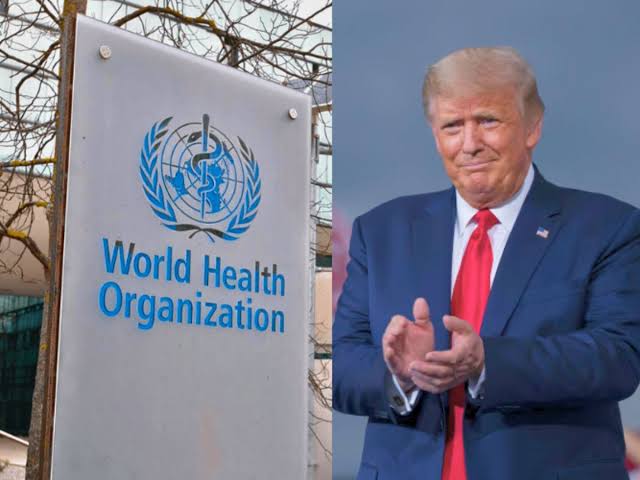
The United States has formally withdrawn from the World Health Organization, completing a process initiated by President Donald Trump through Executive Order 14155 signed on January 20, 2025.
Following the expiration of the required one-year notice period, the U.S. government officially exited the global health body on January 22, 2026, citing deep concerns over the WHO’s handling of the COVID-19 pandemic, its resistance to structural reforms, and persistent gaps in accountability, transparency, and institutional independence.
As part of the withdrawal, the U.S. terminated all government funding to the WHO and recalled American personnel and contractors from the organisation’s headquarters in Geneva and its offices worldwide. Official U.S. participation in WHO committees, leadership bodies, governance platforms, and technical working groups has also ended, while hundreds of bilateral engagements previously conducted through the organisation have been suspended.
U.S withdrawal from the WHO has remained a policy objective of the Trump administration since 2020, following earlier attempts during the president’s first term to disengage from the body over its pandemic response.
Despite the exit, U.S. authorities say the country will continue to play a leading role in global public health. The government has pledged to maintain strong disease surveillance systems, improve outbreak response capabilities, strengthen global biosecurity coordination, and promote health innovation through direct partnerships outside the WHO framework.
Officials argue that leaving the organisation restores financial accountability to American taxpayers. Although the WHO has 194 member states, the United States has historically borne a disproportionate share of its funding. In recent years, U.S. mandatory contributions averaged about $111 million annually, while voluntary funding stood at roughly $570 million per year, running into billions of dollars over time.
The U.S. government maintains that it will continue to support global health initiatives independently, engage partners directly, and deploy resources more efficiently, while ensuring clearer oversight of public funds.
With the completion of the legal withdrawal process in January 2026, the United States has fully ended its membership, governance involvement, and financial contributions to the World Health Organization.