

Yetroselane Fashion Hub has empowered 1,000 young Nigerians with skills for career and business growth in the fashion industry, marking a notable contribution to youth employment and enterprise development. The beneficiaries, aged 18 to 35, were trained under the WEFash Impact Project, an incubation and accelerator programme executed in partnership with the Challenge Fund for Youth Employment and the Netherlands Ministry of Foreign Affairs. The initiative combined hands-on training with business development support, mentorship and tools aimed at turning creativity into income and enterprise opportunities.
According to Yetunde Akande, founder and CEO of Yetroselane Fashion Hub, the project reached talent across 25 states, with women accounting for 90 percent of participants in a deliberate push for gender inclusion and reduced inequality. She explained that the programme facilitated the creation of 1,000 jobs, matched 400 beneficiaries to decent work placements, enabled 170 to start new fashion businesses and supported 430 to scale or improve existing ventures. To help young entrepreneurs compete in the market, selected beneficiaries received start-up kits including sewing machines, industrial heat pressers, sewing tools and free business registration to boost visibility and credibility.
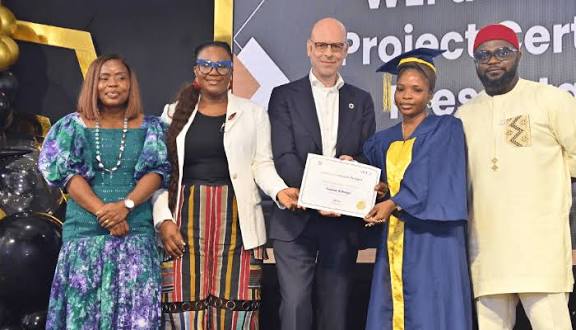
The graduation ceremony, attended by industry stakeholders and partners, celebrated creativity, resilience and the expanding influence of Nigeria’s creative economy. The Consul-General of the Kingdom of the Netherlands delivered the keynote, highlighting skills development as a critical vehicle for youth advancement. The event also drew the chairman of the National Communications Commission and the CFYE Nigeria team lead, reinforcing institutional support for fashion as a pathway to employment and inclusive economic growth.
Among standout stories was Oyebola Ganiyat, named best graduating participant, who despite managing sickle cell built her fashion brand into a thriving venture and now trains other women, promoting indirect job creation and community empowerment. The cohort further benefited from a cross-regional mentorship network connecting participants with industry experts across Nigeria, Ghana, Liberia, Sierra Leone and Gambia, expanding access to knowledge and market exposure beyond local boundaries.
For Africa’s MSMEs and fashion sector, the programme demonstrates how skill-focused interventions can accelerate business formation, fuel creative entrepreneurship and expand value chains. If sustained, such initiatives could strengthen the continent’s growing apparel ecosystem and open wider opportunities for young innovators eager to participate in the global fashion economy.