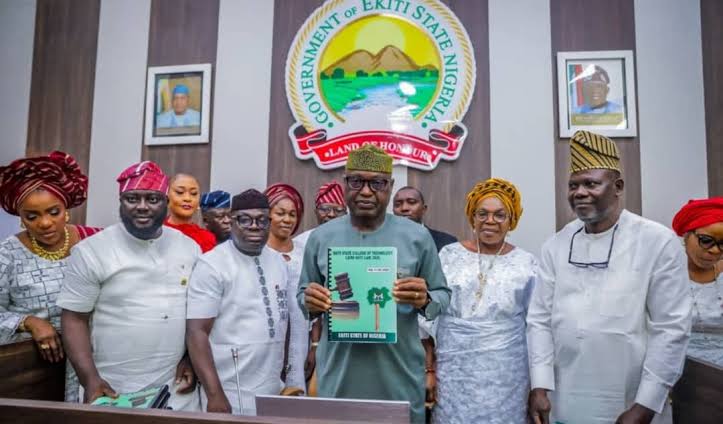
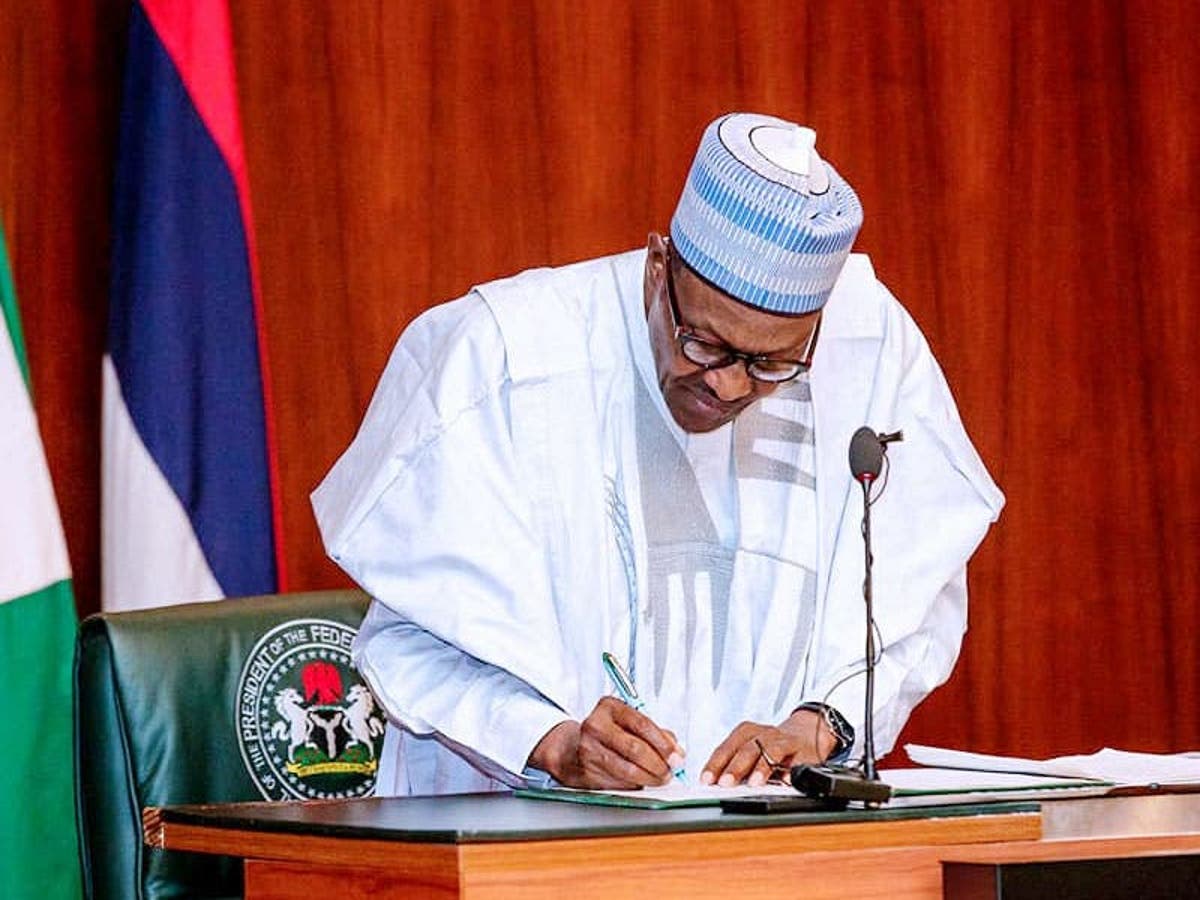
Ekiti State has taken a pioneering step in Nigeria’s ongoing tax reform process by becoming the first state in the federation to domesticate the Nigeria Tax Administration Act (NTAA). Governor Biodun Oyebanji formalised the transition on Wednesday by signing the Ekiti State Revenue Administration Law, 2025, into law.
The law was signed during a brief ceremony at the Executive Council Chamber in Ado-Ekiti, where Governor Oyebanji also assented to the state’s ₦415.57 billion 2026 budget.
By enacting this legislation, Ekiti aligns its internal revenue framework with the federal government’s NTAA — a key component of Nigeria’s broader tax reform agenda aimed at harmonising tax assessment, collection, and enforcement across all levels of government.
Key Changes and Reforms Under the New Law
Under the new Revenue Administration Law:
Ekiti repealed the older Ekiti State Board of Internal Revenue Law of 2019 and replaced it with a modernised framework designed for efficiency and transparency.
The state introduced a strictly electronic payment, billing, and receipting system to reduce revenue leakages and improve accountability.
The Ekiti State Internal Revenue Service (EKIRS) now holds exclusive authority to collect taxes, curbing unauthorised third-party revenue collection.
EKIRS has been granted prosecutorial powers and administrative penalty authority to enforce compliance effectively.
The law adopts the harmonised list of taxes and levies approved by the Joint Revenue Board (JRB), helping to promote fairness and consistency in tax administration.
Governor Oyebanji described the law as a bold statement of his administration’s commitment to transparency, modern governance, and economic empowerment. He emphasised that the e-payment system will ensure public funds flow directly into state coffers, reducing opportunities for mismanagement.
Broader Impact and Business Environment
Officials say the new revenue law is expected to institutionalise harmony, fairness, certainty, and accountability in tax administration at the subnational level, which could significantly improve the ease of doing business for individuals and enterprises operating in Ekiti State.
By creating a clear and unified revenue system, the law aims to reduce multiple taxation, protect businesses from extortion, and strengthen institutional capacity — reforms that could empower MSMEs and enhance investor confidence.
Segun Adesokan, Executive Secretary of the Joint Revenue Board, commended Ekiti for fulfilling a commitment made at a JRB retreat in Ikogosi earlier this year, expressing optimism that other states would follow Ekiti’s example.
The NTAA — designed to take effect from January 2026 — is a cornerstone of national tax reform, and Ekiti’s domestication signals a shift toward more coordinated and efficient tax systems across Nigeria’s subnational governments.