

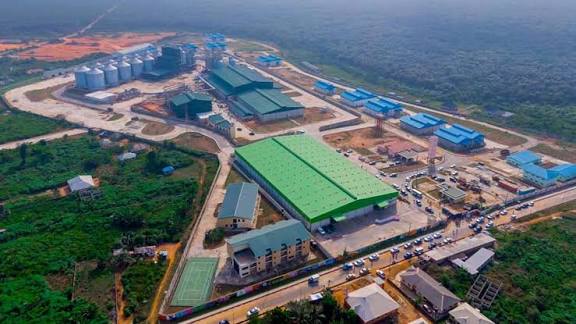
Since its commissioning in January 2023, the Imota Rice Mill has become a key driver of small business growth within Lagos State’s agricultural ecosystem, strengthening the farm-to-table value chain and expanding opportunities for micro and small enterprises.
The facility has supported local rice farmers by providing a steady and reliable processing outlet, reducing post-harvest losses and improving market access. For small agribusinesses involved in farming, aggregation, logistics, packaging and distribution, the mill offers a predictable off-take market that supports stable income and better business planning.
By increasing local processing capacity, the Imota Rice Mill has also helped stabilise rice prices in Lagos, reducing dependence on imports and shielding consumers and small traders from price volatility. This has created a more competitive environment for SMEs operating across the rice value chain, enabling them to scale operations and improve efficiency.
The impact of the mill extends beyond rice processing. Allied sectors such as transportation, storage, retail and food services have recorded increased activity, creating additional income streams for small operators and informal businesses. These linkages have strengthened Lagos’ food economy and broadened participation in agribusiness-related livelihoods.
The project aligns with Lagos State’s wider strategy to enhance food security through sustainable agriculture while promoting inclusive economic growth. By anchoring SME participation across production, processing and distribution, the Imota Rice Mill demonstrates how public investment can translate into tangible business growth, job creation and long-term livelihood support.