

The Nigerian government has launched a new initiative aimed at transforming research findings into tangible economic and social benefits, with a particular focus on supporting innovation and empowering Micro, Small and Medium Enterprises (MSMEs). The policy is designed to bridge the gap between knowledge creation and market-ready solutions, enabling Nigerian entrepreneurs to leverage research for business growth.
The initiative features the establishment of a steering committee chaired by the Minister of Education, Dr. Tunji Alausa, and a policy drafting committee led by Dr. Tayo Aduloju. Speaking during the inauguration of the panels, Dr. Alausa revealed that ₦3 billion has been earmarked for the Research, Innovation and Commercialisation Committee (RICC) in the 2026 fiscal year. He explained that existing research funding streams will be aligned to promote synergy, measurable outcomes, and support for enterprises that can convert research into innovative products and services.
“This policy is not about commercialisation for its own sake,” Dr. Alausa said. “It is about developmental impact, ensuring that research solves real problems, supports productivity, and strengthens national competitiveness.”
The steering committee will provide overall strategic direction, ensure alignment with national priorities, and guarantee institutional ownership at the highest level. The policy drafting team, comprising experts from the Ministry, academia, industry, legal, and policy sectors, will handle the technical work, developing a framework that ensures research outputs are market-ready and business-relevant.
Dr. Tayo Aduloju, who also chairs the Nigerian Economic Summit Group (NESG), noted that the policy will strengthen the institutional foundation for Nigeria’s industrialisation, offering clear funding and incentive structures to drive entrepreneurship. He assured that the draft policy will be delivered within three months, using an evidence-driven, inclusive approach tailored to Nigeria’s realities.
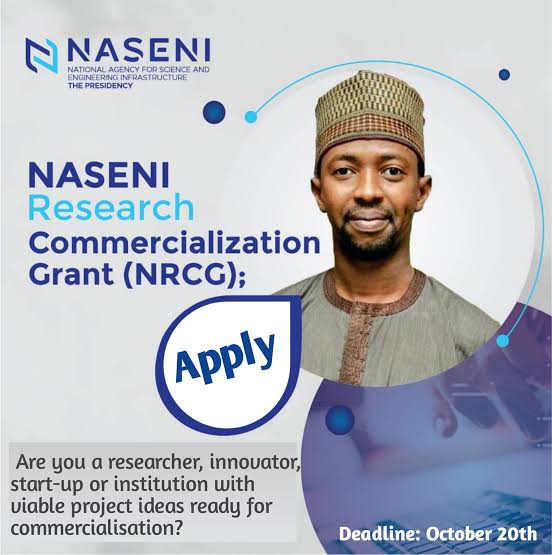
For MSMEs, startups, and innovators, the policy opens a pathway to access research-backed solutions, technical expertise, and resources that can be converted into marketable products. By creating a results-based monitoring and evaluation framework, the initiative aims to ensure that the benefits of research reach enterprises capable of generating jobs, improving productivity, and contributing to Nigeria’s economic growth.
With this move, the Nigerian government is signalling its commitment to fostering an ecosystem where research fuels business innovation, empowering MSMEs and startups to compete globally while addressing local challenges.