

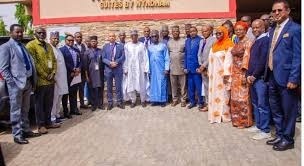
The Federal Government is working with the African Union–Inter Bureau of Animal Resources to strengthen safe and orderly livestock mobility across West Africa, a move aimed at creating a more stable and market-linked system for pastoral movement across the region. The partnership was highlighted at the Continental Learning Forum on Market-Linked Transhumance Models in Abuja, which brought together key players in the livestock economy to discuss approaches for improving pastoral mobility and regional trade.
Speaking at the event, the Minister of Livestock Development said the gathering demonstrated a shared regional commitment to building a resilient livestock sector that supports economic growth and secure value chains. He explained that Nigeria’s livestock sector is currently undergoing major transformation under the Renewed Hope Agenda, supported by the creation of a dedicated ministry to expand the sector’s contribution to the national economy.
The minister noted that government efforts are focused on raising productivity through stronger veterinary systems, improved breeds, and increased private-sector investments that can stimulate growth across the entire livestock value chain. He added that AU-IBAR is running several programmes that continue to deliver positive outcomes for livestock development across Africa, reinforcing regional cooperation and long-term sector reforms.
He emphasised that Nigeria is ready to collaborate with countries in West and Central Africa to drive shared prosperity, stressing that the region’s livestock potential can only be fully realised through systems that are scientifically grounded, economically competitive, and socially inclusive. He said the goal is to create a West Africa where pastoral mobility supports trade, where veterinary systems secure livelihoods, and where livestock development contributes meaningfully to national and continental growth.
In his remarks, the representative of the AU-IBAR Director said the theme of the forum reflects the region’s evolving pastoral realities and the need to transform traditional routes into economic corridors that enable safe movement, cross-border disease control, reliable information flow, and predictable market conditions for pastoralists and private-sector operators. He noted that regional instruments such as the ECOWAS Transhumance Protocol and the 2018 Regulation on Transhumance provide strong legal foundations for regulated mobility, but implementation has been uneven due to insecurity, limited coordination, fragmented policies, and underinvestment in market-aligned mobility systems.
He added that the forum is focused on shaping the future of livestock mobility across Africa, stressing that mobility should not be viewed as a problem but as a vital economic and ecological system that must be strengthened, formalised, and effectively linked to markets.