

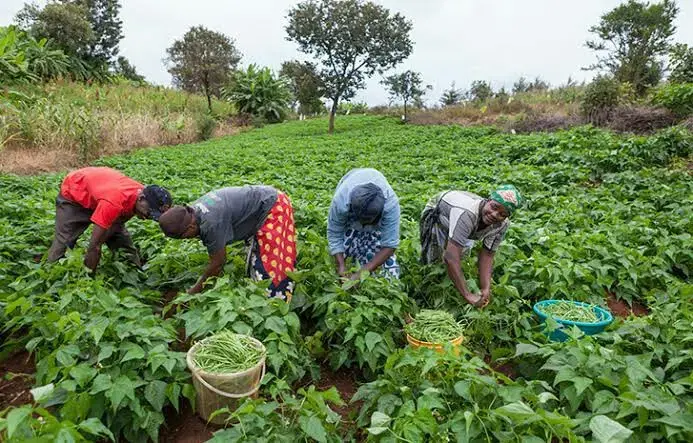
The federal government, through the Kano State Special Agro-Processing Zone (SAPZ) Programme in partnership with IFAD, has empowered 9,870 rice farmers with climate-resilient inputs and modern production technologies, enhancing their capacity to increase yields, improve food security, and strengthen rural livelihoods.
According to SAPZ Knowledge Management and Communication Officer, Rabi Mustapha, the initiative provided farmers with practical tools and knowledge to adopt science-based solutions that directly impact productivity. The empowerment programme was highlighted during the Farmers Field Day at Chiromawa Garin Babba Cluster in Garun Malam Local Government Area over the weekend.
State Project Coordinator, Mr. Aminu Iliyasu, described the field day as “a celebration of knowledge, innovation, and the resilience of smallholder farmers.” He explained that the SAPZ initiative focuses on expanding access to improved technologies, strengthening extension services, reducing post-harvest losses, and opening new market opportunities for rural producers.
“These innovations are not theoretical. They are practical solutions that farmers can adopt immediately to raise productivity and increase income,” Iliyasu said, while commending local authorities for their support.
The programme distributed FARO 44 improved seeds, Urea and NPK fertilizers, and insecticides to beneficiaries across Garun Malam, Gezawa, Bichi, and Bagwai LGAs during the 2025 wet season. Farmers also received expert training on soil selection, seed dressing, nursery establishment, land preparation, and transplanting at proper spacing.
Mustapha added that the training covered fertilizer management, weed control, integrated pest management, and water regulation to enhance rice yields. Participants were also instructed on optimal harvesting, safe moisture drying, and fumigation using phostoxin to reduce post-harvest losses.
The initiative is part of broader efforts to modernize agriculture in Kano, empower rural farmers, and create sustainable income streams that support Nigeria’s food security and economic growth.