


Nigeria could generate as much as $10 billion every year from the cashew industry if the country adopts stronger policies, attracts strategic investments and prioritises value addition, the National Cashew Association of Nigeria has said.
The association’s president made this known during a press briefing in Abuja ahead of the 2026 Nigeria Cashew Day, where industry stakeholders are expected to engage the federal government on reforms needed to unlock the sector’s full potential.
He said Nigeria possesses the land, labour, and market access required to compete with leading global cashew producers but continues to underperform due to weak policy frameworks, poor data systems, and limited local processing capacity. According to him, these gaps have kept the industry largely dependent on raw exports, denying the economy significant revenue, jobs, and foreign exchange.
The Nigeria Cashew Day initiative, first held in Benin in 2023, was created to bring together farmers, processors, exporters, marketers, and service providers across the value chain. After hosting editions in Enugu and Lagos, the event will hold in Abuja in 2026 to enable direct engagement with top government officials on the future of the industry.
The association said its priority is the development of a national cashew policy driven by Nigerian interests, one that protects local producers, promotes organic cashew, and ensures Nigerians fully benefit from what they grow. Despite having about 92 million hectares of land, with more than 34 million hectares of arable land still unused, Nigeria trails countries with far smaller landmasses in both cocoa and cashew output.
With proper coordination, the cashew industry could create jobs for tens of millions of Nigerians, especially in rural areas where poverty remains high. The association argued that the country already has the population, land and financial capacity to become the world’s leading cashew producer if existing resources are better managed.
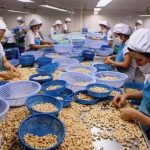
It warned that exporting raw cashew nuts continues to drain value from the economy, stressing that processing should take place close to producing communities. Several leading cashew-producing states still lack processing factories, limiting employment opportunities and slowing rural economic growth. The association urged state governments to introduce incentives that would attract investors to establish processing plants while encouraging entrepreneurs to invest in their home states.
Concerns were also raised about the absence of reliable production data, with Nigeria currently relying on export figures to estimate output. According to the association, a significant volume of cashew leaves the country unrecorded as some exporters bypass official channels to avoid repatriating export proceeds.
Official data from the last season shows documented exports of over 400,000 metric tonnes valued at about $700 million, although industry players believe the actual volume is much higher. With improved policies and investment, Nigeria could raise production to more than 2 million metric tonnes annually within five years and potentially exceed 4 million tonnes in the long term.
At conservative global prices, producing 2 million tonnes alone could generate about $3 billion yearly, excluding income from by-products. The association noted that cashew by-products such as cashew nut shell liquid and residue cake are often wasted locally despite their strong demand on the international market.
By processing cashew locally and fully exploiting the entire value chain, Nigeria could earn no less than $10 billion annually from the industry. The association said the upcoming Nigeria Cashew Day would serve as a platform to signal to global investors that Nigeria is ready to scale its cashew sector and play a leading role in the global market, provided the right policy environment is put in place.