

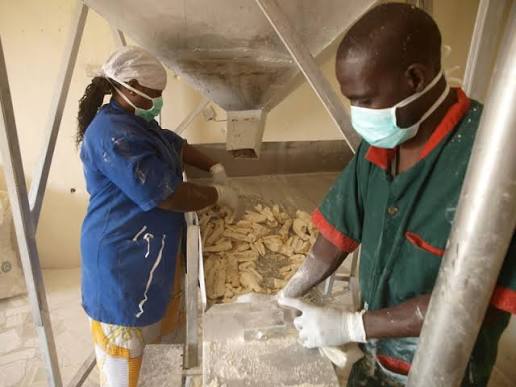
Efforts to strengthen value addition, agroprocessing, and climate-smart mechanization in Nigeria have recorded a notable advancement after a group of food equipment fabricators from different parts of the country completed a five-day technical training focused on developing safer, energy-efficient, and locally manufactured food processing equipment.
The program, which took place in Lagos under the Advancing Nutrition Through Female-Led Food Processing initiative (ANTFem), was organized by Food Health Systems Advisory in partnership with the Nigerian Stored Products Research Institute. The initiative supports the growth, competitiveness, and sustainability of women-led food processing businesses across Nigeria, recognizing their role as an economic backbone within the food value chain.
Female-led processors drive a significant share of Nigeria’s food production and distribution, yet many still struggle with poor equipment standards, rising energy costs, and limited access to appropriate technology suited for micro, small, and medium-scale operations. The training sought to address these gaps by building technical skills that improve productivity, lower production costs, and enhance food safety, ultimately making nutritious products more affordable for low-income households.
A programme lead at Food Health Systems Advisory described the training as an important milestone for local manufacturers, explaining that it was structured to ease the technical and operational challenges that female-led food businesses face. According to the lead, these barriers often slow expansion and make it harder for small processors to compete with imported products.
Imported machines, though widely used, are becoming increasingly expensive and slow to procure. In many cases, they also fail to match local production realities. Locally fabricated equipment is more accessible but often falls short of industrial standards, resulting in inconsistent product quality, reduced durability, food safety concerns, and higher running costs for small businesses. These challenges have long limited MSME productivity within the food sector.
The training exposed participants to global best practices in sanitary design, welding, machining, quality control, and the integration of renewable and energy-efficient technologies such as solar power. By improving fabrication standards, the programme aims to ensure that locally built equipment meets regulatory requirements while maintaining affordability for MSMEs and improving their competitiveness in the market.
A senior official and head of Nigeria’s post-harvest engineering research unit highlighted the need for greater inclusion within the fabrication ecosystem. The official noted that women remain underrepresented in fabrication despite their dominance in food processing, pointing out that bridging that gap will require consistent advocacy and skill support.
Fabrication, the official emphasised, is not limited to men and the transfer of technical knowledge will enable local fabricators to produce equipment that is safe, efficient, and capable of delivering hygienic food products. This, in turn, strengthens consumer trust and the overall quality of food that reaches markets across the country.
Stakeholders believe that with improved local manufacturing capacity, Nigeria can gradually reduce dependence on imported machines, boost MSME productivity, and expand opportunities for female processors in agro-industry.