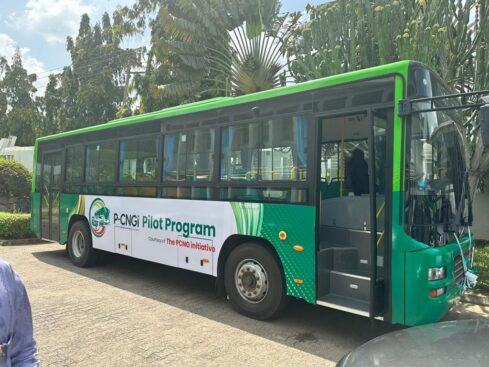


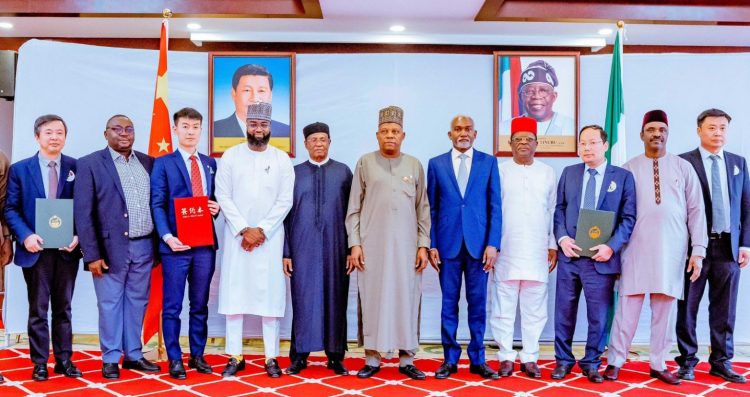
The Presidential Initiative on Compressed Natural Gas and Electric Vehicles (Pi‑CNG) has signed a landmark Memorandum of Understanding (MoU) with China’s You Jie Te Environment Technology Ltd (YJT) to localize the production of critical CNG and electric vehicle (EV) infrastructure in Nigeria.
The agreement, signed during a five‑day visit by a Pi‑CNG delegation led by Executive Chairman Ismaeel Ahmed to YJT facilities in Chengdu and Hangzhou, China, aims to accelerate the local manufacturing and assembly of CNG dispensers, refueling stations, and EV charging facilities, helping Nigeria expand access to cleaner and more affordable transport energy.
Local Production and Smart Tech Integration
Under the MoU, YJT’s advanced Internet of Things (IoT) monitoring solutions will be integrated into Nigeria’s compressed natural gas (CNG) and EV ecosystem. These technologies will complement Pi‑CNG’s National Gas Vehicle Monitoring System (NGVMS), enabling real‑time monitoring of refuelling equipment, station performance, regulatory compliance, and network data across the country.
Ahmed said the partnership will help create jobs, transfer skills, and improve service reliability throughout the CNG and EV value chain, delivering better outcomes for commuters, operators, and the broader economy.
During the engagement, the Pi‑CNG delegation also visited the factory of Sichuan Witent Technology Co. Ltd, a key manufacturer of CNG conversion kits. Talks were held on potential investments in local assembly and full‑scale manufacturing lines in Nigeria to meet growing demand for vehicle conversions and deepen local content within the gas‑to‑transport value chain.
The partnership is expected to accelerate Nigeria’s transition to cleaner transport fuels, reduce dependence on imported infrastructure, lower costs for consumers and transport operators, and spur job creation in manufacturing and services. By combining local production with smart monitoring systems, Pi‑CNG also aims to improve safety, operational efficiency, and regulatory oversight of CNG and EV refuelling networks nationwide.
This move reinforces Nigeria’s broader strategy to build a more resilient, inclusive, and sustainable transport energy system while expanding access to alternative fuels that can cut emissions, support industrialization, and improve affordability for commuters and businesses.