

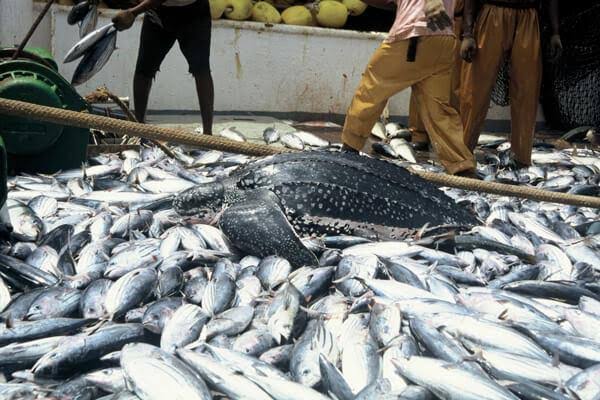
Nigeria’s fish production climbed by 300,000 metric tonnes in 2025, marking the first increase in more than a decade and signalling a shift in the country’s push to reduce food imports and strengthen its blue economy.
The Ministry of Marine and Blue Economy disclosed the development in a statement issued on Wednesday, describing the increase as a major turnaround after years of stagnation in the fisheries and aquaculture sector. According to the ministry, the rise reflects deliberate reforms aimed at cutting Nigeria’s heavy reliance on imported fish while expanding local production, jobs and value creation.
The minister of Marine and Blue Economy, Adegboyega Oyetola, was credited with breaking what the ministry described as long-standing constraints that had held back the sector for years. The statement noted that since assuming office in August 2023, and particularly through 2025, the minister has driven policy and operational changes that have begun to unlock growth across the maritime and fisheries ecosystem.
Officials said the increase in fish output is directly linked to renewed confidence in the sector, improved coordination and a clearer focus on positioning the marine and blue economy as a pillar of Nigeria’s economic diversification strategy. Beyond food security, the ministry said the growth supports employment, especially for small-scale fishers, processors, cold-chain operators and other MSMEs operating along the fisheries value chain.
The ministry also linked the improved performance of the sector to broader maritime reforms, including the resolution of the Apapa port gridlock, which had disrupted trade and logistics for over two decades. By early 2024, coordinated policy actions and operational discipline eased congestion around the Lagos ports, reducing cargo dwell time and logistics costs while improving efficiency.
The clearing of the Apapa corridor, officials said, removed a major barrier to investment and helped restore Nigeria’s ports as viable gateways for domestic and regional commerce. For fisheries businesses, this has meant smoother movement of inputs, equipment and processed products, lowering costs and improving market access.
The ministry stressed that the turnaround in fish production shows the sector has entered a phase of renewal, with reforms translating into measurable outcomes rather than policy promises. As Nigeria continues to grapple with food inflation and foreign exchange pressure from imports, the growth in local fish production is expected to ease supply gaps while strengthening livelihoods across coastal and inland fishing communities.
For MSMEs in aquaculture, processing and distribution, the rebound signals new opportunities as government reforms begin to align infrastructure, policy and market access. The ministry said sustaining the momentum will remain critical as Nigeria seeks to deepen local value chains, attract investment and build a resilient blue economy capable of supporting long-term growth.