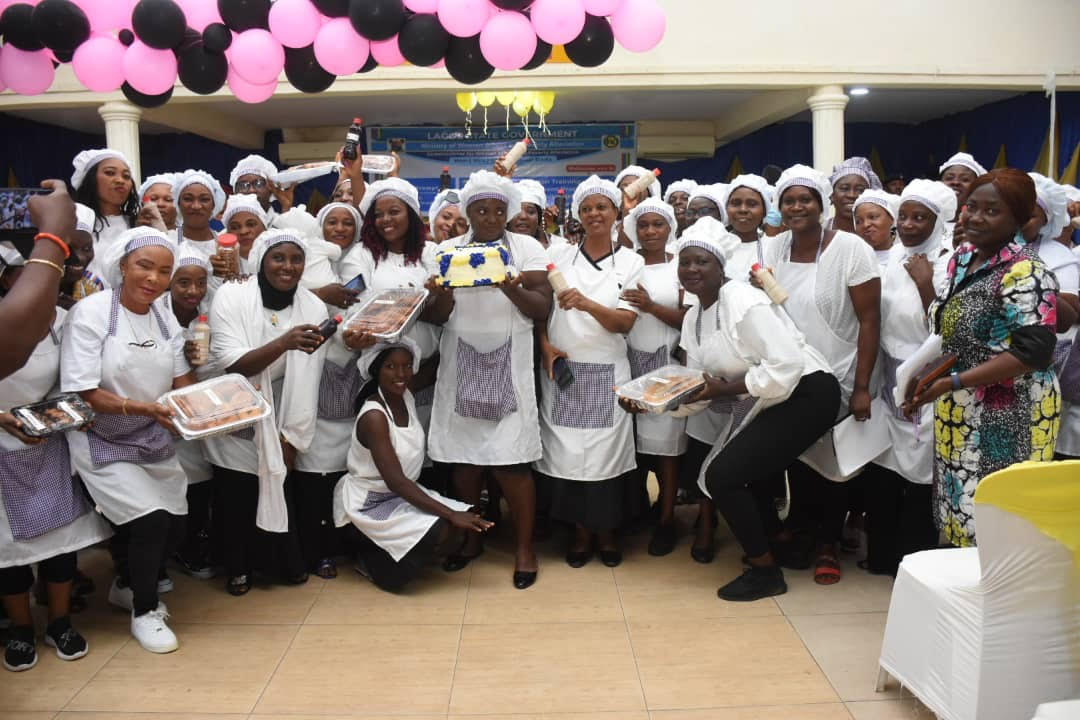


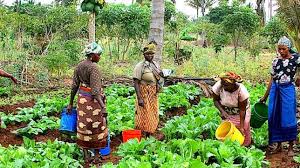
The Presidency, through the Office of the Senior Special Assistant to the President on Food Security, in collaboration with UNESCO REF and the Police Officers’ Wives Association Lagos State Chapter, has launched a bespoke Urban Agriculture Training Programme aimed at strengthening food security while expanding income opportunities for women in Lagos State.
The initiative was formally inaugurated in Lagos, where the Senior Special Assistant to the President on Food Security said the programme aligns with President Bola Ahmed Tinubu’s Renewed Hope Agenda and recognises women farmers as critical drivers of Nigeria’s food system. She explained that the programme is designed to reinforce the Lagos agricultural food supply chain while empowering women through innovation, sustainability and financial inclusion.
The training programme, themed “Seed of Empowerment: Growing Women in Lagos,” equips participants with practical skills, agricultural knowledge and access to income-generating opportunities suited to urban environments. According to the organisers, the initiative is aligned with the National Agricultural Technology Innovation Policy and is directly linked to the ₦500 billion Offtake Guarantee Fund under the Produce for Lagos Programme launched in July 2025. Through this structure, participants are guaranteed a steady income every two to three weeks, ensuring that empowerment outcomes translate into measurable financial stability for households.
Plans are already underway to scale the programme significantly in 2026, with organisers targeting at least 120,000 women across all local governments and LCDAs in Lagos State. Speaking at the launch, the President of UNESCO REF described the initiative as a shift from charity to capacity building, noting that while philanthropy offers short-term relief, long-term empowerment comes from skills, access and sustainable income models. He said the programme is structured to transform lives and communities, with a broader vision of expanding similar interventions to other states across the country to strengthen Nigeria’s national food system.
The Lagos State Chairperson of POWA emphasised that empowering women has far-reaching effects on families, communities and food security. She explained that each participant would receive a Tier 2 certificate that not only recognises their training but also guarantees subsidised access for their children to future agricultural programmes, ensuring that the benefits of the initiative extend beyond the current generation. She added that participants were also provided with seed varieties to enable them to immediately begin farming activities, reinforcing the programme’s focus on practical, hands-on empowerment rather than theory.
The beneficiaries described the programme as a timely alternative source of income. One participant noted that the opportunity provides financial support and savings potential as she prepares for life after her national service, highlighting how the initiative supports young women at transitional stages of their careers.
The programme is supported by partners including the National Horticultural Research Institute, the Institute of Agricultural Research and Training, and several international organisations under UNESCO REF’s Strategic Intervention Programme. Organisers noted that improved household financial stability is a strong deterrent to crime, positioning the initiative as both an economic and social intervention. It is also being presented as a viable corporate social responsibility model for private sector players seeking to invest in women-led agribusiness, food security and inclusive economic growth.