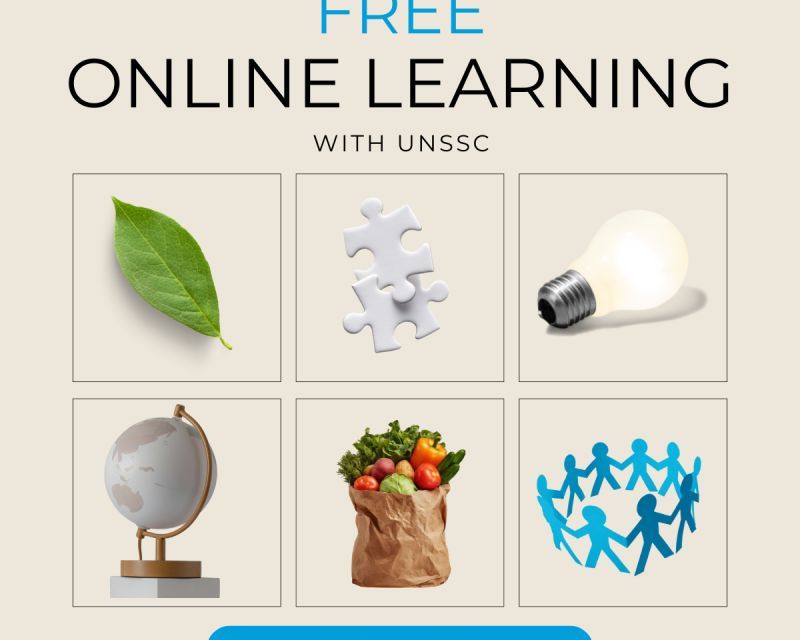
Looking to build practical skills in sustainability and development? The United Nations System Staff College (UNSSC) offers free online learning opportunities delivered in partnership with trusted global organisations. These courses draw on real-world policy experience, research, and practice and are tailored for learners who want to deepen their understanding of global challenges like sustainable development, governance, peace, and circular economy principles.
One standout offering is the “Circular Economy and the 2030 Agenda” online course ,designed to equip you with knowledge and tools to contribute to sustainable systems aligned with the United Nations Sustainable Development Goals (SDGs).
👉 Explore the course:https://www.unssc.org/courses/circular-economy-and-2030-agenda-3
The global shift toward sustainability requires leaders, entrepreneurs, professionals, and students to understand how economic systems can be reshaped to keep resources in use longer, reduce waste, and support equitable prosperity. Circular economy principles are increasingly relevant to public policy, business strategy, innovation, and environmental stewardship — especially for societies seeking resilient development pathways.
This course helps you:
Connect global policy goals (like the 2030 Agenda) with practical sustainability strategies.
Understand systemic transformation through resource-efficient, inclusive economic models.
Apply circular thinking to business, governance, and community initiatives.
Whether you’re involved in MSME development, climate action, public sector planning, or sustainability entrepreneurship, this course gives you a policy-informed, practical foundation.
What You’ll Learn
The “Circular Economy and the 2030 Agenda” course typically covers:
Foundations of Circular Economy: Concepts, principles, and value creation
Circularity & SDGs: How circular approaches support multiple global goals
Policy Frameworks: Role of governments, institutions, and regulatory systems
Business & Innovation: How firms and startups embed circular practices
Systems Change: Stakeholder engagement and multi-sector collaboration
Case Studies: Practical examples from global regions and development sectors
These modules combine theory and system-level insights with real examples from international practice that help you apply concepts locally or in your organisation.
Who Should Enroll
This course is suitable for:
Students & early-career professionals interested in sustainability, development, or governance
Entrepreneurs & MSME founders looking to integrate circular practices into business models
Public sector professionals working on policy, environment, or economic transformation
NGO / civil society practitioners focused on community resilience and sustainable systems
Academics and researchers seeking interdisciplinary frameworks
No formal prerequisites are typically required — just curiosity and commitment to learn.
Course Format & Delivery
✔ Fully Online: Accessible from anywhere with an internet connection
✔ Self-Paced or Guided: Learn at your own schedule (check the portal for exact format updates)
✔ No Fees: the course is offered free of charge through UNSSC and partners
✔ Certificate of Completion: Often available after final assessment — useful for CVs, LinkedIn profiles, and professional development records
This flexible design lets you balance learning with work, study, or travel.